










The mountain within
Dr Herta von Stiegel draws fascinating parallels: between Nadeș and New York, London, and Nairobi; between the hills of Transylvania and Kilimanjaro; between life lessons learned in childhood and a remarkable career in leading banking institutions; and between the planet's potential for development and the divine plan for character building.
The second coming of Jesus | The third millennium of waiting
Although often associated with horror-movie scenarios, in the Bible the end of the world is linked to the Second Coming of Christ—a glorious event that will mark the start of a new era. However, two millennia have passed since the birth and crucifixion of Christ. The so-called delay of Jesus's return is a source of irony for atheists and causes turmoil in the...

Patience and resilience
When I think of patience and resilience, many inspiring life stories and names come to mind. Among them, one shines with particular intensity: Anne Frank.
Christianity, between constraint and libertinism
To be a good Christian, they say, you must not swear, steal, lie, cheat or speak ill of anyone.
What if I were born into another religion?
This question is asked by critics who want to point out the social, cultural and contextual nature of the Christian religion, and its relativism, presenting it as a product of society rather than of revelation.

Saint Paraskeva: History and mythology
For the crowds gathered around the casket containing the relics of Saint Paraskeva, everything is just dream and faith. Amazingly much faith. There is also something else. There is the hope of a miracle, a miracle that will cure diseases, cover debts, and make life happy.

Christians do not understand unconditional forgiveness
Forgiveness is the central idea in Christianity that sets it apart from other religions.
We are the writers of our own future | An overview of biblical prophecy
As a prophetic book par excellence, the Bible is often misinterpreted, its prophecies taking on fatalistic overtones or frightening attributes. Properly understood, the prophecies of the Bible do more than predict the future. They can also give the reader a clearer perspective on the present.
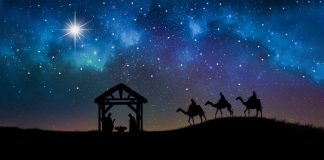
The birth of Jesus and its impact on world history over the last two millennia
No leader has ever inspired mankind to a greater extent than the baby born in Bethlehem, the one who divided history. No other personality in the world has left such a mark on such a large number of fields as Jesus did. And the legacy He left in terms of human rights (especially women's rights), education, attitudes towards children, humility, and forgiveness is...
The seasons of (un)belief in Christopher Hitchens
Christopher Hitchens was not merely an atheist but, as he described himself, a militant antitheist. It was in his home, at his invitation, that the group known as “The Four Horsemen of New Atheism” first convened. Born in 1949 in postwar England, Hitchens was shaped by the politics and intellectual currents of the 1960s.

What Does the Bible Say About Contagious Diseases (like COVID-19)?
Since the outbreak of the corona virus pandemic, many people are asking faith-based questions. Is this a judgment of God on the human race? Is this a sign of the End? Does Bible prophecy speak about it? Even if people don’t believe in God or the Bible, they are wondering what their Christian neighbors are thinking about the matter.
Camping at the end of the world
I still remember May 21, 2011, like it was yesterday. Thousands of kilometres away in Boulder, USA, an evangelist named Harold Camping, president of the popular ministry Family Radio, was in the news spotlight. He had predicted that on May 21, more than 200 million Christians all around the world would be raptured away to heaven and that five months later, the world would end.

Wives should submit: Is the Bible the enemy of equality?
According to the National Coalition Against Domestic Violence, every nine seconds, a woman is assaulted or beaten in the United States. Which means that by the time you reach the end of this paragraph, yet another woman will have tragically become a victim of violence.

What is the purpose of my life on Earth?
The unverified stories of children dying, due to severe emotional and sensorial deprivation, despite being fed and medically cared for, spread the theory that one can die because of lack of love, although being well taken care of. However, if we look more closely at the historical and personal human experience, we find that it is not necessarily the lack of love that...

The crossless Cross
The mention of the city of Rio de Janeiro evokes images of the traditional carnival or the vast, exotic beaches such as Ipanema and Leblon. But most often we think of the huge monumental statue representing Christ the Redeemer (Cristo Redentor) with wide, open arms, looking down towards humanity from the top of Mount Corcovado (700m).