









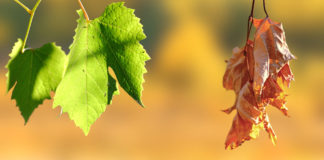
Life in the vicinity of death
One night while checking on his patients in a palliative care centre, the therapist risked asking a confusing question to a person whose universe had shrunk to the size of his sickbed: “What brought you joy today?” The answer was immediate: “Being alive.”
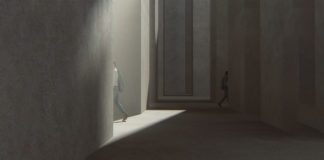
We are more than we can easily explain
Suppose I leave the window open then leave home. A stack of banknotes can be seen on the table through the open window. An individual walking down the street notices the opportunity, thinks for a while, but decides to move on. Why would a man who has the opportunity to steal decide not to?
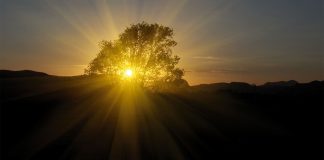
The tree that overshadowed the earth
"[Jesus] told them another parable: 'The kingdom of heaven is like a mustard seed, which a man took and planted in his field. Though it is the smallest of all seeds, yet when it grows, it is the largest of garden plants and becomes a tree, so that the birds come and perch in its branches.' He told them still another parable: 'The...
How I came to believe
I was a pagan as a child. Not by choice, but as a consequence of lacking any access to the Word of God. In the 1980s Romania, catechizing an Orthodox child (whose parents were members of the Communist Party) was a highly unlikely event Pavlik Morozov’s myth, the hero-child that denounced his own father, generated caution.

The imperatives of absence
Contrary to one's initial impression, vigilance is not the main theme of Jesus' parables of "absence and expectation." Absence is central to these stories, because it is absence which enriches them, rather than impoverishing them. Absence is not a shortage, a gap, or a sign of non-existence—it is a catalyst.
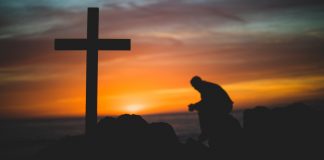
The miracle of the ordinary | Rediscovering transcendence in simplicity
In our desperate search for miraculous answers or confirmations, we often forget that the most profound miracles are hidden in the seemingly mundane details of our lives.

What if I don’t need God?
Far more terrifying than persecution, ideologies, and militant atheism put together may be the hidden force behind the seemingly innocuous statement: "You don't need God!"

Gifts for good
When I was in my mid-twenties, I attended a university in Brisbane, Australia, two hours from where I lived. I had a friend in the city who I’d sometimes stay with to avoid having to travel back and forth on back-to-back uni days.

What did I miss about God in my 20s?
I was twenty when I first became curious about God. I was fortunate to see His presence in the lives of my friends and longed for that same presence in my own life.

What Creation tells us about us
It seems that one of the requirements for any sustainable worldview, philosophy or faith is that it should have some account of origins. Perhaps we could think about it simply as a necessary element of a good story. It is certainly one of the recurring tropes of superhero sequels or sci-fi epics that at some point we will come to better understand a...

The love that whittles all my fears away
In a psalm that is worth reading on our coldest mornings and in our darkest nights, King David asked some rhetorical questions—“Whom shall I fear? Of whom shall I be afraid?”— questions which our contemporaries would not dare to answer.

Is faith a negative thing in life?
The effect or influence that a particular thing has on us depends largely on where that thing falls on the scale of our values. It's one thing to lose your folding fan in a foreign country and quite another to lose your passport.

The goal that appears when you reach it
I like to look back. When I am climbing a mountain, it is an excuse to rest. But I also do it for another reason—to see how far I have climbed.
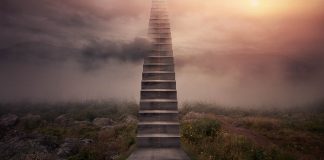
Is faith reasonable?
Science and faith, as important tools in the knowledge process, are often perceived to be in a tense relationship with each other, because of the fundamentally different worldviews that characterize them. The implications for life’s big questions are obvious—and sufficient to rob someone of the comfort of indifference towards such high-stakes conclusions.
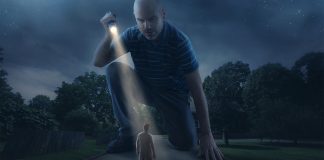
The great astonishment
I was talking to the man I call Professor and I asked him, "I know you had reservations about getting baptised. Why did you decide to do it anyway? What was the deciding factor?"