














Patience and resilience
When I think of patience and resilience, many inspiring life stories and names come to mind. Among them, one shines with particular intensity: Anne Frank.

The illusion of connection
I sat slouched on the edge of my bed, blue light illuminating my face in the dark. It was the tenth time I’d checked my phone in the space of five minutes. I grimaced. Was something wrong with me?

Great expectations in friendship
How can we protect ourselves against expecting too much of our friendships? Can we do something to prepare for the disappointment? And what does one do to deal with it?

Case study in a medical journal: gastroparesis healed through prayer
The relationship between religion and science is complicated, and occasional controversies over healing through prayer have not helped. The tragedy of stories in which refusing medical treatment in favour of prayer ends in death is often exploited in the press to portray religion as rudimentary and backward. That is why it is all the more interesting that a case study attesting to the...

How (and why) to encourage your pastor
After 25 years in the ministry, during which he never once considered leaving, Pastor Tim Kuperus admits that the last three years have been difficult enough for him to consider a different path.

Finding God on the moon
“Faith has always gone to space. Artemis II shows how much it has changed” (Jack Jenkins, Religious News Service, April 7, 2026).

Norma Nashed | Poverty made her a mother to thousands of children
Norma Nashed has been running the Restore a Child organisation for more than two decades, helping 4,000 children in ten African countries.

Is God with me?
"When I was little, I felt that God was with me, but now I feel so lonely! I wonder if God really was with me back then".

Decoding the EU’s connection to end times and Bible prophecy
With news that the far-right Freedom Party (PVV) has won the election in the Netherlands, once again there is talk of an exit from the European Union on the horizon—this time being called “Nexit”.

Ruth’s long road to love
From a devout upbringing in Peru to years of abuse, addiction and raising four children alone, life was anything but easy for Ruth. At her lowest, she discovered a God of love who gave her the strength to completely transform her life.

People get ready
The song, “People Get Ready” was inspired by Martin Luther King Jr’s march on Washington and his “I have a dream” speech. In writing it the following year (1964), Curtis Mayfield not only captured the spirit of the march but created a song that caught the mood of the times and injected hope: “There’s a train a-comin’… . You don’t need no ticket,...

Sparks in the darkness: a surprising reading on suffering
"Yet man is born to trouble as surely as sparks fly upwards" (Job 5:7).

Redefining the impossible
The mix of emotions a family goes through when expecting a baby is both wonderful and terrifying.
When everything seems to be in order, the...
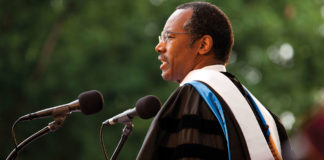
On the side of God and logic: An interview with Dr Ben Carson
Benjamin Solomon Carson is the famous American neurosurgeon who, in 1987, became the first to successfully separate twins conjoined at the head.

What Creation tells us about us
It seems that one of the requirements for any sustainable worldview, philosophy or faith is that it should have some account of origins. Perhaps we could think about it simply as a necessary element of a good story. It is certainly one of the recurring tropes of superhero sequels or sci-fi epics that at some point we will come to better understand a...