









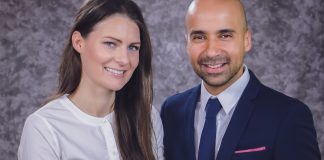
A deeper understanding of God
Daniel Bruneau’s parents, who hail from Mauritius and the Seychelles respectively, met in England. When Daniel came to Atlanta to teach at the university, he wanted to deepen his relationship with God.

I wish I had known that there was a divine plan for me
At the age of 20, I graduated from the Orthodox Theological Seminary. I thought I was talented, I was confident, and I had a very clear idea of the path I wanted to take in life. I had all the answers. Or perhaps I hadn't asked myself enough questions.

The Akathist: Who do we stand up for?
According to Google’s online search trends, the most popular religious topic among Romanian internet users in 2019 was prayer. [1]
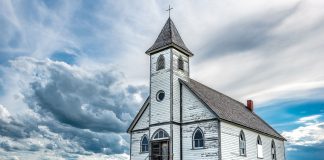
How to revive a dying church
Trying to describe a dying church like the one he was called to serve, Pastor Chris Lewis uses the image of a car "turned over, in a ditch, covered by weeds and beer cans, with a rusted out engine, and a couple of bodies in the trunk."

When fear of death does not let you live
Anecdotally, they say that fear of public speaking is the biggest fear of mankind, after fear of death. Everyone smiles at this order of priorities, but no one disputes or discusses the fear at the top of the ranking.

What is stewardship?
The smell of burning food filled my tiny kitchen. “What's that smell?” I asked a friend who was sharing my house for the week. Every young man knows the smell, familiar from an early age—your first acquaintance comes from burnt toast and camping trips where, after burning everything you tried to cook, you end up eating your baked beans straight from the can.

The prayer meeting that toppled a regime
How a small group of faithful Christians instigated the end of Soviet-controlled East Germany.

Finding God on the moon
“Faith has always gone to space. Artemis II shows how much it has changed” (Jack Jenkins, Religious News Service, April 7, 2026).

The God Who takes cares of all my needs
“And my God will meet all your needs according to the riches of his glory in Christ Jesus” (Philippians 4:19).

Free to follow Jesus
Choir rehearsal had begun only five minutes earlier, but I was already restless. Using a convenient excuse, I slipped out quietly, thinking about the crooked piece of rebar I had hidden a week before. It was exactly what I needed to force open the lock on the door without a handle, deliberately left that way so no one could enter the construction site...

Lou, the woman with no regrets left
Any sacrifice is hard to understand from the outside. But it's even harder to understand how sacrifice can be a choice that brings joy to the person making it. The easiest people to include in this category are, of course, mothers. For them, the sacrifices never seem too many or too hard. Even more amazing are those mothers who raise other people's unwanted...

Ruth’s long road to love
From a devout upbringing in Peru to years of abuse, addiction and raising four children alone, life was anything but easy for Ruth. At her lowest, she discovered a God of love who gave her the strength to completely transform her life.

In praise of the ordinary
What image comes to mind when you hear the word success? A blue-suited CEO? Internet billionaire Mark Zuckerberg? Perhaps Mother Teresa or Nelson Mandela? But if you’re like me, you probably didn’t think of a person living an unglamorous, day-to-day, ordinary life.
“The Scandal of Grace” | A God who forgives (even) murderers
Contemplating a God who forgives any sin, no matter how monstrous, can be a stumbling block to those who believe there must be some reasonable limits to forgiveness. But it is also a reason for hope for those who might otherwise feel too sinful to seek Him.

The illusion of connection
I sat slouched on the edge of my bed, blue light illuminating my face in the dark. It was the tenth time I’d checked my phone in the space of five minutes. I grimaced. Was something wrong with me?