













Loving till we see an end to sad stories
We carry sad stories with us, and the meaning of these stories often eludes us. What if we discovered that these stories provide unique opportunities to change lives? Cori Salchert discovered, through family tragedy, the resolve and desire to take care of children with terminal illnesses.

He survived genocide
More than three decades have passed since the horrific genocide in Rwanda. Amid the outburst of murderous rage, there were people—both Africans and foreigners—who stood in the way of the hatred and bloodshed.

Change and stability in religion
Professor Bailey V. Gillespie, from La Sierra University's Department of Theology and Christian Character in California, impressed me with both the diversity of his interests and his prestigious achievements, particularly in the field of young people's religious experience.

No doubt has overtaken us, except that which is common to mankind
Without ever looking for doubt I often welcomed it with interest and gratitude. I did not run away from it, nor did I treat it with indifference. I rather sought to tone it down.

Heaven won’t be boring. Here’s why.
Forget floating on clouds—discover the thrilling, purposeful eternity God has planned for you.

Decoding the EU’s connection to end times and Bible prophecy
With news that the far-right Freedom Party (PVV) has won the election in the Netherlands, once again there is talk of an exit from the European Union on the horizon—this time being called “Nexit”.

The spiritual community of readers
For almost six years, I relentlessly pursued Dr. Bill Knott to interview him for the programme Starting Point. He had been editor-in-chief of the Seventh-day Adventist Church's official publication, Adventist Review, for a decade. Finally, in early 2016, we sat down for an interview in which we discussed how he developed his talent as a writer and the current significance of the Adventist...

The second reason to forgive: the “Justice” you refuse to let die will not let you live
Following several surveys (1988, 1991, 2009), the Gallup organisation revealed both good news and bad news. The good news is that 94 percent of people believe forgiveness is very important. The bad news is that 85 percent admit they are not ready to do it on their own.

Beholding beauty
I’m walking along a remote beach in Hermanus, South Africa. There’s not a single other footprint in the sand. I take off my shoes and let my feet sink deep into the warm, fine powder. Bliss. My friend, a local who drove me here, takes one look at my face and asks with undeniable pride, “What do you think?” But I can’t answer....

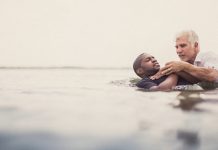
Waters of death, waters of life
I still remember it like it was yesterday: the brightness of the sun on my skin, the chill of the water, the crowds of cheering people. We had gathered that Saturday afternoon on the shores of Lake Jindabyne, a half-hour drive from Mount Kosciuszko, Australia’s tallest mountain.

Chariots of Fire: what happened next?
This is the part of the story most people know: Eric Liddell, a conscientious Christian athlete, refused to run in the heats for the 100-metre sprint at the 1924 Paris Olympics because they were held on a Sunday. Instead, he switched to the 400 metres, an event he had hardly trained for, and won the gold medal for Britain. The story of his...

What if I don’t need God?
Far more terrifying than persecution, ideologies, and militant atheism put together may be the hidden force behind the seemingly innocuous statement: "You don't need God!"

The embrace of heaven
My body felt like it was on fire, as if someone had pierced my skin with thousands of burning needles, and I could barely breathe. Fear had crept into my life some time ago, following me like a shadow that drained my soul and stole my precious moments of peace.

The light that can make whales fly
Hendel Butoy was born in Brazil and raised in southern California. He studied at the California Institute of the Arts, and was then offered a position as an animator at Walt Disney in 1979.
Prayer and the presence behind the silence
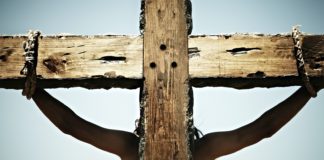
The words God is not listening! He is not answering! are the essence of one of our most troubling complaints. Is there an answer to it powerful enough to pull us from doubt’s darkness?