







Why the Church?
I’m sure you’ve heard the statement: “I’m all about Jesus, but I’m not interested in church.” I’ve heard this many times and have even found myself saying it during certain periods of my life.
The exclusive prayer: Who should we address when we pray?
The stakes are high when it comes to identifying the one to whom we should pray, and we can discover who by answering an apparently simple question: Can we expect prayers to be heard no matter who we address them to?
Five reasons why I have faith in God
Faith has brought me not only a sense of God's presence, but also evidence that He is answering our requests. Therefore, the other reasons that made me believe have become stronger.
Are you gifted?
There’s something lying on a massive table. It’s a huge picture. You move closer and see that the design is made up of individual pieces, like a jigsaw puzzle. But the pattern is unusual. It isn’t an immediately recognisable image, such as a Swiss mountain or a bouquet of tulips.
The face that transforms me
Every time I look through the lens of a microscope, I am struck by the realisation that beyond what the naked eye can see lies a universe far deeper and richer.
The meaning of life: between the sandbox and the constellations
Life is a stage that we enter without a script, although we are constantly influenced by forces of varying visibility: social, educational, religious, economic, and political.
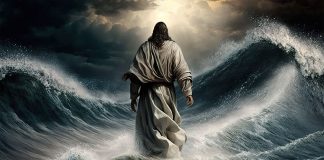
Through the storm with God by your side
"Even to your old age and gray hairs I am He, I am He who will sustain you. I have made you and I will carry you; I will sustain you and I will rescue you" (Isaiah 46:4).
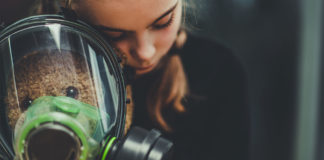
Shutters down all over Europe: life in the time of the new coronavirus
These days we all need to hear good news—that life will soon return to normal and that we will be able to return to the troubles of yesterday, which now seem small to us. In the meantime, our lifestyle has seen changes that we could not have imagined just a few weeks ago.

Chernobyl: The cost of lies
On April 26th 1986, reactor 4 at Chernobyl nuclear power plant in Ukraine exploded. The effects were catastrophic—it was the worst nuclear disaster in history. The explosion let out the equivalent of 500 Hiroshima bombs-worth of radiation, and the area around Chernobyl—including the town of Pripyat—is now uninhabited. It will be unsafe to live there for the next 20,000 years.
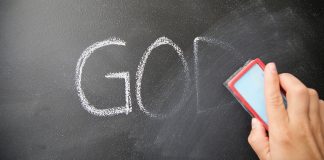
Atheism at war
As the rising sun brought life and light to the east coast of North America, it was greeted by a brisk autumn morning. Hurricane Erin was on the move in the Atlantic, creating heavy rainfall from Newfoundland to Bermuda. A cold front saved most of the eastern seaboard from the hurricane’s destruction and the resulting high-pressure front produced clear skies—perfect conditions for air travel.
Does life have meaning, or not?
When I ponder the statement, “Life holds potential meaning under any condition, even the most miserable,” the story of an anonymous woman comes to my mind. She made a deep impression on me and taught me about two existential states: having, and being.
How I came to believe
I was a pagan as a child. Not by choice, but as a consequence of lacking any access to the Word of God. In the 1980s Romania, catechizing an Orthodox child (whose parents were members of the Communist Party) was a highly unlikely event Pavlik Morozov’s myth, the hero-child that denounced his own father, generated caution.
The end of the world—and humility
“They pour out arrogant words; all the evildoers are full of boasting” (Psalm 94:4).

How God heals a marriage that is lost
Kent Hansen kindly agreed to talk to us about the most painful episode of his life, the loss of his wife. Beyond the sadness, it is a discussion rich in emotion and lessons for us all.
Instant regrets, memory wipes & free will
Have you ever done something you immediately regret? Perhaps you’ve let your emotions get the better of you, lost control and said something particularly harsh to a friend in the heat of a moment—you wish you could take the words back the moment they left your lips.