










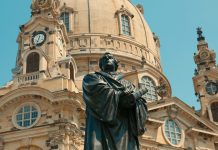



Is the Bible history?
The Bible is the best-selling book of all time. But while people are aware that the Bible exists, these days relatively few know much about it or have taken the time to actually read it.
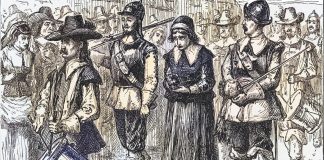
Mary Dyer
That fateful day of June 1st, 1660, was not the first time Mary Dyer wound up at the gallows. The previous time, with her hands tied and her face covered by the handkerchief of her former pastor, Reverend John Wilson, she had escaped death by the skin of her teeth, after a death sentence that had already killed two of her dear friends...

The love that seeks us despite our imperfection
One of the Bible’s most refined literary and artistic works is the Gospel of John. In recent readings, it increasingly emerges as a gospel of decisive, personal encounters between the Lord Jesus and various individuals.
When sounds proclaim the glory of God
The year 1685 gave the world two of its greatest composers: Johann Sebastian Bach and George Friedrich Handel. The presence of the great biblical subjects in their masterpieces not only filled the hearts of believers with joy, but determined a new direction in the evolution of the musical language, which continues to have an impact to this day.
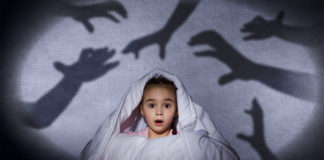
The love that whittles all my fears away
In a psalm that is worth reading on our coldest mornings and in our darkest nights, King David asked some rhetorical questions—“Whom shall I fear? Of whom shall I be afraid?”— questions which our contemporaries would not dare to answer.
“Do not keep on babbling” | Public prayer and its challenges
The way we pray in public reveals what our secret prayers are truly like. Beyond mere words, it is our attitude and motivation that give meaning and substance to prayer.
Hope in the storm
This coronavirus crisis has, for me, some perplexing parallels with a well-known incident narrated in the Gospel of Matthew (14:22-33). The disciples are confined in a little boat in the middle of a terrible storm, almost as we are confined at home today by the emergency laws of our countries.

The Ten Commandments
The book of Exodus is the second book in the Bible. It follows God’s servant Moses leading the Israelites out of slavery and through the desert towards the hoped-for Promised Land. Along the way, they stop at Mt Sinai. Moses goes up the mountain and receives from God ten commandments carved on a stone tablet. This is one of the most famous sections...
The Good Place: great questions, medium answers
In the opening scene of The Good Place, celestial being Michael (Ted Danson) explains that most world religions and philosophies get their respective understandings of the afterlife only about five per cent right.

We write the future ourselves: an overview of Biblical prophecy
The Bible, a prophetic book par excellence, is often misinterpreted. Its prophecies can seem fatalistic, or fear-mongering. But, when understood correctly, Biblical prophecy more than unravels the future—it also provides us with a clearer perspective on the present.
The mystery of the seventh day (III)—Was Jesus a legalist?
In the first two articles of this series, we examined the biblical theology of the Sabbath in relation to the divine act of creation, the history and theology of the people of Israel and early Christianity. This third and final article in the series will examine the Sabbath from the perspective of legalism, under which some commentators have placed seventh-day observance.
The primary message
How do we discover the intention of the biblical author—and how important is it in interpreting the Bible correctly?
The end of the world according to Christianity
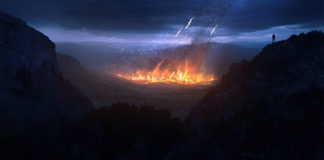
The idea of the end of the world refers to the end of the social order and humanity; the end of the planet as we know it. But according to the Bible, these will not all come at once.

Is that you, God?
Christians believe that God speaks to people. But what does God sound like? Learning to recognise the difference between God’s voice and the myriad of other voices in your head takes much patience and practice. But it is possible!

The seasons of (un)belief in Christopher Hitchens
Christopher Hitchens was not merely an atheist but, as he described himself, a militant antitheist. It was in his home, at his invitation, that the group known as “The Four Horsemen of New Atheism” first convened. Born in 1949 in postwar England, Hitchens was shaped by the politics and intellectual currents of the 1960s.