













Loving till we see an end to sad stories
We carry sad stories with us, and the meaning of these stories often eludes us. What if we discovered that these stories provide unique opportunities to change lives? Cori Salchert discovered, through family tragedy, the resolve and desire to take care of children with terminal illnesses.

Patience and resilience
When I think of patience and resilience, many inspiring life stories and names come to mind. Among them, one shines with particular intensity: Anne Frank.
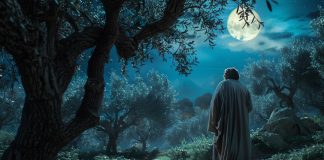
Gethsemane, the garden of the divine sighs
As soon as the tourists leave the land of the silent agony of Gethsemane, their lives return to normal, and the garden where the Son of God sobbed in indescribable pain, misunderstood and unsupported even by His closest disciples, sinks back into oblivion.

The second coming of Jesus | The third millennium of waiting
Although often associated with horror-movie scenarios, in the Bible the end of the world is linked to the Second Coming of Christ—a glorious event that will mark the start of a new era. However, two millennia have passed since the birth and crucifixion of Christ. The so-called delay of Jesus's return is a source of irony for atheists and causes turmoil in the...

The story of blessed Ayyub
During the time when the people of Israel were enslaved in Ta Kemet (the Black Land), and Prince Moses, the great scribe, had taken refuge among the northern Arabian tribe of Midian, a captivating story shared by the campfire caught his attention. It was the tale of another prince who, like him, had suddenly lost everything.

What is stewardship?
The smell of burning food filled my tiny kitchen. “What's that smell?” I asked a friend who was sharing my house for the week. Every young man knows the smell, familiar from an early age—your first acquaintance comes from burnt toast and camping trips where, after burning everything you tried to cook, you end up eating your baked beans straight from the can.

My journey to Bethlehem
They say that "all roads lead to Rome". This famous saying originated in ancient times with the extensive network of roads built by the Romans to facilitate communication and travel throughout their empire.

Christians do not understand unconditional forgiveness
Forgiveness is the central idea in Christianity that sets it apart from other religions.
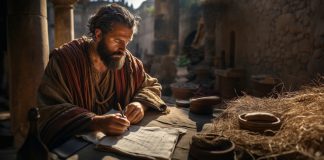
The fascinating Gospel of John
Dr Kendra Haloviak-Valentine, Professor of New Testament Studies at La Sierra University in Redlands, California, comes from a family with a tradition of theology and research.

How (and why) to encourage your pastor
After 25 years in the ministry, during which he never once considered leaving, Pastor Tim Kuperus admits that the last three years have been difficult enough for him to consider a different path.

Finding God on the moon
“Faith has always gone to space. Artemis II shows how much it has changed” (Jack Jenkins, Religious News Service, April 7, 2026).

When God described Himself, He called Himself “the Word”
Whether you're a practising believer, a casual believer or, conversely, an atheist, you cannot help but be taken aback by the fact that one of the earliest images of God we have in Scripture is an unexpected one for those times: the image of God writing (Exodus 31:18).

The Bible as a political weapon: When “Thus says the Lord” means “This is what I want”
It is estimated that over 100 million Bibles are printed annually, which means over 11 000 per hour, or about 3 every second. These numbers show the huge impact the Bible has on people’s lives.

Norma Nashed | Poverty made her a mother to thousands of children
Norma Nashed has been running the Restore a Child organisation for more than two decades, helping 4,000 children in ten African countries.

Hope born of compassion and resurrection
I was born and raised in a Seventh-day Adventist Christian family, so Jesus was a familiar presence in our home. Although it took me...