











When God described Himself, He called Himself “the Word”
Whether you're a practising believer, a casual believer or, conversely, an atheist, you cannot help but be taken aback by the fact that one of the earliest images of God we have in Scripture is an unexpected one for those times: the image of God writing (Exodus 31:18).

Patience and resilience
When I think of patience and resilience, many inspiring life stories and names come to mind. Among them, one shines with particular intensity: Anne Frank.
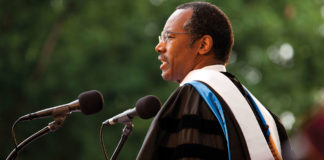
On the side of God and logic: An interview with Dr Ben Carson
Benjamin Solomon Carson is the famous American neurosurgeon who, in 1987, became the first to successfully separate twins conjoined at the head.

Christians do not understand unconditional forgiveness
Forgiveness is the central idea in Christianity that sets it apart from other religions.
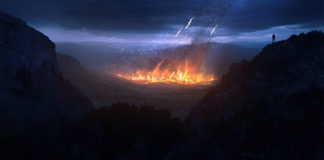
The end of the world according to Christianity
The idea of the end of the world refers to the end of the social order and humanity; the end of the planet as we know it. But according to the Bible, these will not all come at once.

Case study in a medical journal: gastroparesis healed through prayer
The relationship between religion and science is complicated, and occasional controversies over healing through prayer have not helped. The tragedy of stories in which refusing medical treatment in favour of prayer ends in death is often exploited in the press to portray religion as rudimentary and backward. That is why it is all the more interesting that a case study attesting to the...

Beyond what the eyes can see
There are times when we feel that life is hard and that some challenges are beyond our power. But when we look around us, at people like Ben Underwood, we realise that we are not only unaware of the gifts we have been given, but also of the immense power to enjoy life even when those gifts are denied us.
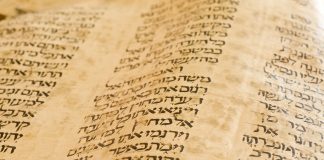
The accuracy of biblical manuscripts
What guarantees do we have that the texts from which modern translations of the Bible were made reflect the original?
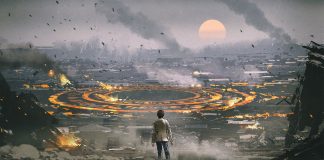
The pop apocalypse in movie theatres
Please, not now! Don’t come right now! Please... I suddenly opened my eyes in the darkness of my bedroom and, all of a sudden, the heat wave building up during the nightmare met the coolness of the night reality. You haven’t come yet... Thank you, God!
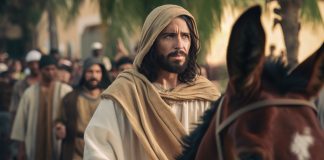
The prophecy of the Messiah
Daniel chapter 9 contains what many consider to be the most sublime prophecy of the Old Testament—a prophecy of the Messiah, Jesus Christ. Amazingly, not only did this prophecy reveal the purpose of His incarnation as a child, but it also specified when His ministry would begin and when He would die.

What Creation tells us about us
It seems that one of the requirements for any sustainable worldview, philosophy or faith is that it should have some account of origins. Perhaps we could think about it simply as a necessary element of a good story. It is certainly one of the recurring tropes of superhero sequels or sci-fi epics that at some point we will come to better understand a...

Did Martin Luther really believe in Sola Scriptura?
For ten years Luther read the Bible twice a year. His first Bible was so thoroughly read that he "knew what was on every page and where every passage was found." Martin Luther is the most prominent name among those who brought about the Reformation and took Bible study to a new level.
Discrepancies in the Bible and the solution of creative tension
Few topics have the potential to stir debate as intensely as the question of biblical discrepancies. Given what is at stake, we invited Kwabena Donkor, associate director of the Biblical Research Institute in the United States, to share his perspective on biblical discrepancies and their implications.
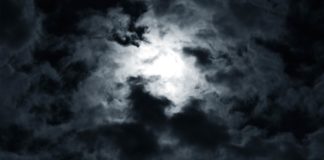
The forgotten sign
On May 19th, 1780, a strange phenomenon turned a sunny morning into an unexpected night. The event, known as the Dark Day, was seen as a sign of divine judgment by contemporaries and as a means of ridiculing apocalyptic expectations by sceptics.