






What is the use of general knowledge?
"No man can be called friendless who has God and the companionship of good books." (Elizabeth Barrett Browning, British poet)

How can we protect our children from the dark side of the internet?
Early exposure to technology helps children accumulate information quickly, opening up new ways for them to understand the world. At the same time, however, the online environment can put many of its most vulnerable users at risk.
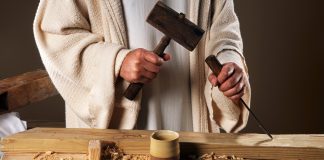
“More than a carpenter” | Book review
Josh McDowell, founder of the trans-denominational Christian organisation Campus Crusade for Christ and author of More Than a Carpenter, is known to the public after a decades-long career and having had several volumes published in the field of apologetics.

How to manage “good debt” and “bad debt”
Almost half of Romanians are in debt, while 39% say that they don’t pay their debt on time, and 29% never create a budget. These figures, based on the most recent national studies, reflect Romanians’ values and financial literacy, but they can also represent the starting point of a conversation about "good debt" and "bad debt."
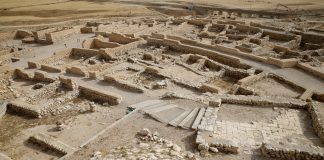
“Eternity In Their Hearts” | Book review
Born in Canada, in 1935, Don Richardson was a missionary who fervently carried on the Renaissance spirit of the great missionaries. Having studied at the Prairie Bible Institute and the (Wycliffe) Summer Institute of Linguistics, together with his wife, he worked as a missionary among the Sawi of Papua New Guinea for 15 years, and translated the Bible into their language. His books,...
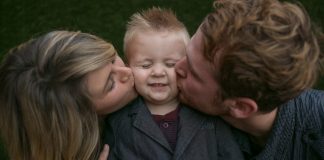
Help your child grow smarter
Every loving parent wants their child to become sharper, more intelligent, and to develop the essential skills needed to succeed in life. Science offers several key “tools” parents can use to help their child boost IQ and unlock potential, making them powerful advocates for their child’s future success.
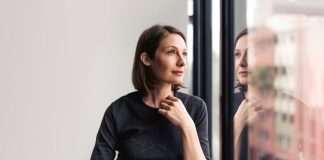
“One Thousand Gifts: A dare to live fully right where you are”
"One Thousand Gifts" describes the beautiful revolt of a soul that does not want to be crippled by what it has lost, but to pierce its own suffering like an arrow springing from the bow of grace, a leitmotif of the whole book.

Saving creativity
An experimenter is like a hunter who, instead of waiting quietly for game, tries to make it rise, by beating up the locality where he assumes it is. – Francis Bacon, 17th-century English philosopher
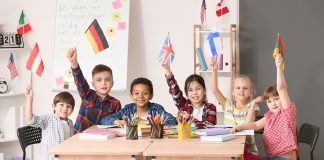
The bilingual child’s advantages
The child’s linguistic appetite must be stimulated from an early age, experts say, highlighting that the benefits the bilingual child reaps extend beyond the linguistic sphere.
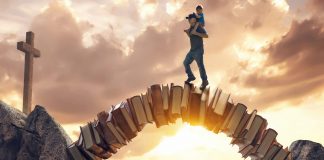
Bridges between people
I love books as much as I love people, but if I’m honest with myself, sometimes I find a little more comfort in the company of books than in the presence of my fellow humans.

“My Utmost for His Highest” | Book review
Oswald Chambers’ devotional, My Utmost for His Highest, has a remarkable circulation and is considered probably the most well-known and beloved Christian devotional. It was first published in 1927 in the United Kingdom and has been in print ever since. It has been officially translated into 39 languages, with over 13 million copies sold.

Teachers who shape us
"The task of the modern educator is not to cut down jungles but to irrigate deserts." (C. S. Lewis)
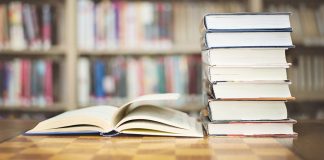
A review of the book “The Nobility of the Spirit”
"My exploration of the nobility of the spirit . . . began with the realisation that, following 9/11, many intellectuals were desperate to justify what had happened, failing to distinguish between being highly critical of their own Western society and legitimising a crime, no matter the reasons. I asked myself, 'What use are so many intellectuals who know all the books and music,...

Amid people and books
Meetings with people and books have shaped the space for a sometimes unequal, sometimes unsatisfactory growth between the human I am and the one I would like to be.
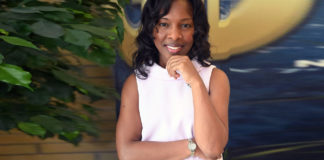
Reacting to the worst news
In a conversation with Dr. Shelly-Ann Bowen, we discussed her research on what determines whether someone will be active or passive in the face of catastrophic events—fires, floods, or a cancer diagnosis. Social injustice, a lack of self-awareness, and even an immature understanding of faith paralyse action. But there are ways to make positive changes.