









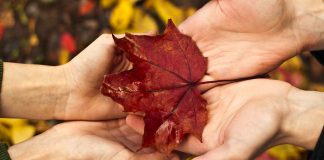
Love doesn’t give up, regardless of the prognosis
Lace-edged rumours wafted through the student campus in Sagunto, Spain: Devin, one of the American boys who had come to Spain for a year of study, was dating Teresa, a second-year theology student who was hard to miss. Her striking beauty and cheerful nature attracted gazes like a magnet. No one suspected then, not even the protagonists of this relationship, that their love...

How to be a better partner
We often forget that a relationship is the sum of two people—he + she = they—and what one does inevitably affects the other. That means each person’s behaviour influences the entire dynamic. Yet, more often than not, we focus on what the other person should or could do for us or for the relationship, and rarely stop to ask: What can I do...

Most wanted words | Friendship and edifying conversations
The face muscles relax, and the eyes become empty before boredom urges them to seek another centre of interest. The restlessness culminates with some leaving and others immersing themselves in the exploration of their phones. Others seek to divert the discussion with a joke or hasten its end through a detached or ostentatious silence.

I love you for your flaws too
Love is the most beautiful and perhaps the most incomprehensible thing in the world. We find it in movies, in books, in the strength of a "yes" declared before the civil authorities, and in the embrace that binds spouses at the end of a hard day's work.

How to restore trust in a romantic relationship
Trust is so difficult to build, and yet so easy to lose. A lie, a broken promise, or infidelity may lead to the weakening and breaking of trust between partners. Sometimes rebuilding that trust may seem impossible. But the good news is that it is possible to restore trust in a relationship.

The kindness that wipes away the effects of daily stress
Daily stress is a good excuse to avoid other people's needs, but this choice is a double loss. The kindness we display to make other people's days better is a very strong antidote to the high level of stress we experience daily.

Christ in them
I notice people, and passionately collect their stories. My favourite stories include those small cracks that allow one to peek inside another soul, those moments when their voice is almost imperceptibly altered, the eyes light up for a reason I do not know, and their gestures are unexpected.

Brave enough to listen
There’s a saying that if it’s too good to be true then it usually is. But what if it’s too bad to be true? What if something is so shockingly horrendous that it makes you stop thinking about anything else for a while? Does that mean it’s a lie as well? The numbers associated with domestic violence are quite staggering—and when my own sister revealed...

Marital incompatibility, and how to avoid it
Our moral problem is man’s indifference to himself… We experience and treat ourselves as commodities, and [as if] our own powers have become alienated from ourselves… We are a herd believing that the road we follow must lead to a goal since we see everybody else on the same road. We are in the dark and keep up our courage because we hear...

An encounter with kindness
Sartre may have been right when he said Hell is other people. Yet, for some, their first step toward Heaven is meeting the God who shelters in someone else's soul.

I’m here! | friendship and interest in each other
I'll leave my heart as payment among the coins, and pass... – Nichita Stănescu
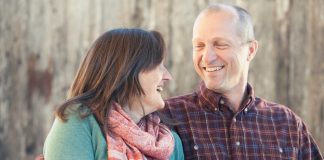
Build boundaries, protect your marriage
The most important human relationship you'll ever have is with your spouse. Protect it at all costs.

COVID-19 and our low-risk but endangered children
All COVID-19 statistics lead to the same conclusion: the young ones, our children, are at the lowest risk of getting ill or dying from the virus. That’s comforting. But the pandemic does pose a certain danger to them.
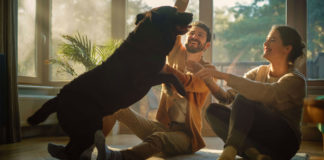
Pets: Our help for a better life
I've always liked pets, but from a distance. Raised by a mother convinced that animals cannot possibly live under the same roof as people, I adopted a similar opinion, which I kept for many years, even if a great number of people tried to prove me wrong.
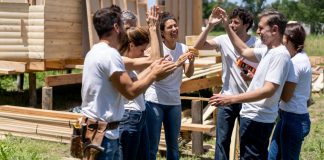
Courage in the deluge
After a chance meeting of mutual friends, I was introduced to Tim and Sonia in a restaurant in central Toowoomba, Queensland, eight days before their home was washed away.