














COVID-19: Crisis prayer
A major crisis pushes us to re-evaluate the way we see and do things in the fields of health, finance, and social interaction. But how does this crisis affect our religious practices—especially the most common of these, prayer?

Parents of prodigal sons
Few things can pierce a parent’s heart as painfully as their children’s decision to walk away from God. Pain, guilt, shame and the feeling of failure are the crushing burdens which parents of prodigal sons carry, while still wavering between hope and discouragement.

The inferiority complex and how to combat it
A lack of self confidence is like a stain that doesn't go away by itself. It is like oil dripping out of a machine, its drops collecting in the puddle of an inferiority complex. Such a problem is difficult to mitigate, even with motivational speeches or hopeful injections of fragile optimism.

Has Peter Thiel unmasked the Antichrist?
A Silicon Valley billionaire worried about the Antichrist sounds like satire—until you realise Peter Thiel is deadly serious.

COVID-19: A sad opportunity for the homeless
The prevailing message in the context of the pandemic was clear, but also disturbing: "Don't go out! Stay home! Work from home!" But what about those who do not have a home?

Antonyms will not be around forever
God does not abandon anyone. It is God who is abandoned. Even when Scripture describes God as turning His face away, this is actually the reluctant and painful acknowledgement of humanity's decision to cross the point of no return in its relationship with God.

The Second Coming Files: A 2000-Year Investigation | Part VII: Adventism After the Great Disappointment
At the end of a journey tracing how the belief and hope in the Second Coming of Jesus have manifested themselves in the two-thousand-year history of Christianity, the final part of The Second Coming Files presents the remaining elements that link that history to the present day: the Millerite movement and Adventism.

Injustice and God: Is He the wrongdoer or the one wronged?
The concept of reward is one that encapsulates a world of joys, satisfactions, pleasant emotions, and accomplishments. It is usually correlated with what we do, what we say, who we are, and so on. We could say that it is an expression of our value in relation to the world. But any reward can be overshadowed by painful feelings when there is a...

The pop apocalypse in movie theatres
Please, not now! Don’t come right now! Please... I suddenly opened my eyes in the darkness of my bedroom and, all of a sudden, the heat wave building up during the nightmare met the coolness of the night reality. You haven’t come yet... Thank you, God!

Food and health with Dr Michael Orlich of the Loma Linda University Medical Center
When the founders of the Loma Linda University Medical Center in California laid the foundation, their purpose was somewhat paradoxical. Christians to the bone, and Adventists on top of that, they echoed the words attributed to the great reformer Martin Luther: “Even if I knew that tomorrow the world would go to pieces, I would still plant my apple tree.”

Depression also affects Christians
The stigma surrounding mental health issues causes many Christians to hide their conditions, resulting in an epidemic of depression, even among pastors, says Sheila Walsh, a Bible professor and internationally renowned speaker.
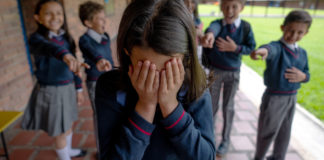
Bullying: Effective strategies to put an end to it
Children who fall prey to bullying cannot save themselves, just as the children who have become accustomed to bullying others will not give up this behaviour without outside intervention. As the phenomenon of bullying spreads, with harmful consequences on children's development, the need to know and apply strategies to combat it is becoming more pressing.

The meaning of life: between the sandbox and the constellations
Life is a stage that we enter without a script, although we are constantly influenced by forces of varying visibility: social, educational, religious, economic, and political.

How to be a good listener
The portrait of a good listener contains skills that are formed over time, through an honest interaction with others, motivated by the desire to understand and help them.

The imperatives of absence
Contrary to one's initial impression, vigilance is not the main theme of Jesus' parables of "absence and expectation." Absence is central to these stories, because it is absence which enriches them, rather than impoverishing them. Absence is not a shortage, a gap, or a sign of non-existence—it is a catalyst.