







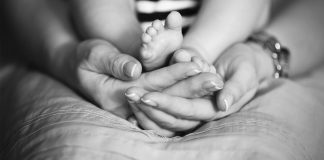
A mother, her disabled child, and God
Dr Denise Dunzweiller, of Walla Walla University in the north-west of the United States, has emerged as a passionate advocate of inclusive education, a technical term for education systems in which children with disabilities are educated alongside other children in mainstream schools, rather than in special classes.
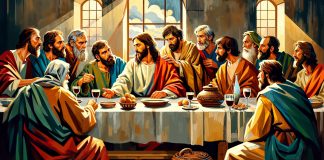
Paul’s savage class critique in 1 Corinthians
If you’ve ever been to a Christian church, there’s a good chance that you’ll have experienced a unique ritual involving bread and grape juice: the Lord’s Supper, or as we’ll refer to it, Communion. Depending on the denomination, your experience may vary wildly. You may be offered a cup that everyone collectively sips out of, accompanied by a piece of bread. Others will...
Busting four porn myths
It’s been said that porn and the internet rose together. As technology develops, the pornography industry finds new and even more instant ways to entangle consumers. I saw a video on social media where a young woman was talking about her subscription account (where people subscribe to access exclusive content of her) making $350k a month.
Is faith a negative thing in life?
The effect or influence that a particular thing has on us depends largely on where that thing falls on the scale of our values. It's one thing to lose your folding fan in a foreign country and quite another to lose your passport.
What not to say to a person suffering from depression
Your friend, who is suffering from depression, needs you. What should you tell them in such moments, and what should you not? No matter how well-intended they are, your words can become emotional weapons, whether you like it or not.

The fresh air advantage
It’s something many of us overlook, yet the research is showing that getting outside is better for us than we might imagine.
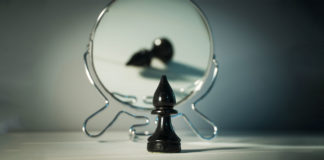
Everything about the person who can hold you back: A short essay about you
Albert Einstein didn't speak until he was 4 years old, and didn't read until he was 7. His parents thought he was mentally disabled, and one of the teachers described him as "mentally slow, unsociable, and adrift forever in his foolish dreams." He was expelled from school and denied admission to the Zurich Polytechnic.
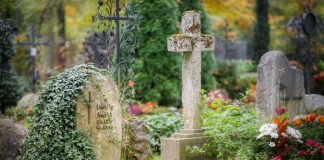
Proximity to death
"Brothers and sisters, we do not want you to be uninformed about those who sleep in death, so that you do not grieve like the rest of mankind, who have no hope" (1 Thessalonians 4:13).

12,000 people for one child
Until 2013, we only knew about the existence of Batman, the famous comic book hero, but almost a decade ago the whole world also got to know Batkid, a real boy from San Francisco, USA, whose story confirms the saying that “truth is stranger than fiction.”

Tony Giles and the courage to feel the world
Close your eyes, cover your ears, and imagine that all your life you will need to get by without being able to see or hear much. Perhaps merely imagining this makes you shiver, and in no way can you associate such a life with joy, independence, or travel. Tony Giles is one of those people who has managed to successfully remove all these...

I think critically, therefore I exist
We live surrounded by words—spoken with confidence, written with authority, and shared at astonishing speed. Yet behind many of them lie confusion, prejudice, and unexamined assumptions. From everyday conversations to public decisions, gaps in reasoning and expression reveal something deeper than mere slips of the tongue: they expose deficiencies in education. In such a climate, critical thinking is no luxury; it is a...
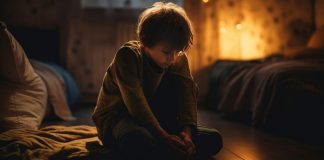
The fear that holds kids back
Before the age of two, most children think the world revolves around them. From their point of view, what they think and how they feel must be what others think and feel, too. They don’t have the concept that other people have different needs and perspectives. It’s why if they can’t see you when they’re playing hide-and-seek, they believe you surely can’t see...
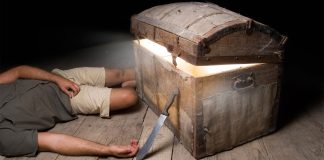
The surprise of this very night
''The ground of a certain rich man yielded an abundant harvest. He thought to himself, ‘What shall I do? I have no place to store my crops.’ Then he said, ‘This is what I’ll do. I will tear down my barns and build bigger ones, and there I will store my surplus grain. And I’ll say to myself, 'You have plenty of grain...

The need for control, between illusion and responsibility
As a child, I suffered because of the decisions the adults would make. At least, that's what I believed for a long time. It seemed unfair to me to not have veto power in the key moments that defined us as a family, and I was looking forward to the day when I would detach myself from the will of my elders.