













Redefining the impossible
The mix of emotions a family goes through when expecting a baby is both wonderful and terrifying.
When everything seems to be in order, the...
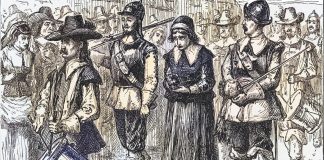
Mary Dyer
That fateful day of June 1st, 1660, was not the first time Mary Dyer wound up at the gallows. The previous time, with her hands tied and her face covered by the handkerchief of her former pastor, Reverend John Wilson, she had escaped death by the skin of her teeth, after a death sentence that had already killed two of her dear friends...
The fatherly Sovereign
In a society with a pragmatic mindset, any kind of belief is subject only to practical judgments. Effectiveness, usefulness, and utility are the basic criteria by which actions, deeds or beliefs are valued.

Supernatural power
It’s revealing that in our increasingly secular culture, people still have a hunger for the magical—the transcendent. Consider the top-grossing movies of 2018, for example. According to the-numbers.com, six of the top 10 were superhero movies, flying, fighting, and blasting their way off the screen and through our wallets. Like the ancient gods of Greek mythology, these superheroes struggle with doubt, jealousy and...

The entourage of Jesus
Ever since Thomas the Unbeliever, Christians have wanted to see with their own eyes what those who have been with Jesus at key moments of His mission saw.
Evolution and probability
At first glance, the idea that life could have emerged spontaneously seems to imply insurmountable probabilities. Indeed, simple yet accurate mathematical modelling reveals infinitesimal probabilities, regardless of the length of time available. So, how is the theory of evolution compatible with these mathematical arguments? Is the spontaneous emergence of life the only improbable aspect of the theory?

Parents of prodigal sons
Few things can pierce a parent’s heart as painfully as their children’s decision to walk away from God. Pain, guilt, shame and the feeling of failure are the crushing burdens which parents of prodigal sons carry, while still wavering between hope and discouragement.

What is the purpose for which God created us?
Life is a fascinating mystery and a constant challenge. Yet, often, we are not content with merely experiencing life as it is.

A second chance: faith in the forgiveness that transforms us
Many years ago, while I was still in high school, our Romanian language and literature teacher assigned us the task of writing a framed story, complete with characters and a plot of our choosing.

ABBA 40 years on: A return with conflicting feelings
After 40 years, ABBA has made a return to the music scene with an album primed to awaken or indulge the nostalgia of generations who lamented the breakup of the Swedish group in 1982. The album comes with a virtual concert in which the group performs all their new songs, with a twist: with the help of digital technology, the singers will appear...
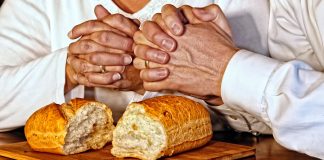
Why we shouldn’t neglect the mealtime prayer
It could be a perfunctory ritual, passed down through generations; a mechanically recited poem. But equally, the mealtime prayer can be a genuine spiritual exercise.

Seduced by conspiracy theories
We live in a polarised world where conspiracy theories proliferate, but some people are more inclined than others to consume and propagate these theories rather than ignore or demystify them.

Self-help and spiritual paralysis
Why personalising Christianity could threaten your salvation.

What did Jesus believe about Creation?
Perhaps the greatest mystery for Christians is the incarnation of God, described in the words of the apostle John, an eyewitness to the life of Jesus: "The Word became flesh and made his dwelling among us. We have seen His glory, the glory of the only Son, who came from the Father, full of grace and truth" (John 1:14).

The slumber of the proud
One of the best-known stories told by ambitious entrepreneurs today is that if you work hard, you will have a lot.