












Learning from Wave Rock
If you’re reading this article in July of 2024, there’s a good chance I already have climbed or am currently climbing Wave Rock. Called Katter Kich in the Nyungar dialect, Wave Rock is an enormous granite cliff face in the shape of—you guessed it—a wave that protrudes from the surface of the earth in the middle of Western Australia’s Wheatbelt. It forms the...

Psychotronic attacks, the news aggregator, and the absurdity factory
A recent article on the website of a Romanian news aggregator claims that prayer protects against psychotronic attacks because it "raises the brain's operating frequencies". The article is a prime example of an editorial genre that proliferates precisely because of the absurdity of its claims, not in spite of them.

Temperance: the lost virtue
Temperance was once upheld by philosophers, saints and stoics. In a world dominated by indulgence, its call to balance feels more relevant than ever.

Does God give signs?
In ancient Israel, the high priests wore a vest that had two stones on it called the Urim and Thummim. Whenever a question about God’s will was brought to the priest, he would ask God to give the answer. If the stone on the left glowed, it indicated divine approval. If the stone on the right glowed instead, it indicated God’s disapproval.

Jesus and the Goddess of Reason | Thomas Paine and the trap of contemporary deism
"I believe in one God, and no more; and I hope for happiness beyond this life." This is how one of the most famous leaders of the American Revolution and an influential political writer of the late 18th century-Thomas Paine (1737-1809)-begins his testimony of faith. A few lines later in the same book, The Age of Reason, after vehemently rejecting the creed of...

Why do we lose our friends?
“Walking with a friend in the dark is better than walking alone in the light” (Hellen Keller).

God and the onion test
Humans have only a fifth of the genetic material of an onion, and slightly more DNA than a mouse. Why would the Creator of life use five times more genetic information for an onion than for a human? And why would He create humans to be only slightly more genetically complex than mice? Aren't long and aimless evolutionary processes a better explanation for...
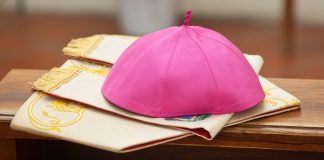
Gregory the Great: the first great medieval pope
Regarded as a saint and one of the six Western Fathers of the Church, Gregory the Great (590–604) is often considered the first great pope. He was the first monk to become pope, and is considered one of the most important. He is also known for sending diplomats (missionaries) who persuaded kings to fight against the pagans and heretics of the West.
The driving forces of evolution
Even those least familiar with evolutionary theory know that it involves a powerful driving force: natural selection. However, as we delve deeper into the theory, we find that things haven't been that simple for a long time. This is because we no longer consider natural selection the sole engine of evolution, and from a certain point of view, not even the most powerful...

Pray as you can
I’m going to be honest with you. I find prayer really hard. If I had to give reasons for all my tears over the past few years, most of them have come during conversations with God.

Book review: Juice
In my humble but literary-educated opinion, Tim Winton is Australia’s finest living novelist. Since winning publication of his first novel in a competition for young writers in 1981, he has had 10 more novels published, as well as collections of stories, plays, books for younger readers and a handful of non-fiction works. Winton has won Australia’s top literary prize—the Miles Franklin Award—on four...

Why our neighbour is the key to understanding God
I have always been fascinated by God. And yet, I believe I could have known Him far better—much more deeply—if only I had better understood what He sought to teach me each day, including through my neighbour.

Puritanism in the Protestant Reformation
Less than 50 years after the supporters of Martin Luther’s ideas in Germany were mockingly called “Lutherans,” England was in its turn discovering a derogative nickname—“Puritans”—which it applied to a category of Christians who disturbed the ordinary life of the English church and society.[1]

The saint who hated God
Martin Luther believed that he knew exactly what God expected of him, and in the tireless endeavour to please God, he came to the point of hating Him.