














“Divine Providence: God’s Love and Human Freedom” | Book review
Bruce Reichenbach's book, Divine Providence: God’s Love and Human Freedom is impressive first of all due to the author’s total disinterest in impressing his readers. Instead, he has a legacy to pass on.

What do we do with the lingering sense of guilt?
I baptize you with water for repentance. But after me comes one who is more powerful than I, whose sandals I am not worthy to carry. He will baptize you with the Holy Spirit and fire. – Matthew 3:11

The Church in mourning: Serving the bereaved in practical ways
When it comes to dealing with grief, psychotherapist Francis Weller points out that "it takes outrageous courage to face an outrageous loss". By supporting those who are bereaved, the Church shows that it possesses the qualities needed to balance concern for current suffering with faith in the ultimate victory over death.

On the banks of a river where no one had ever been
Jim Elliot was 25 years old when he headed to Ecuador as a result of the answer he sought from God regarding his future.

For a clear conscience we must drive away negative thoughts. True or false?
There is a huge volume of literature, in bookstores and online, which contain recommendations for a more enjoyable life, in accordance with the hidden skills of each one of us. One of the great secrets put forward is freeing the mind from all negative thoughts.

Being in harmony with the person in the mirror
We cannot sustain our motivation if we don't connect daily to its source and what generates it, or if we don't constantly strive to remind ourselves why we are moving in a certain direction and how to get there, willingly and unforced, exercising free will, despite the inevitable limitations.
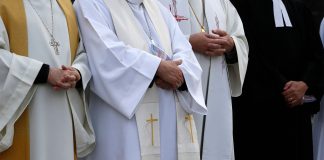
The Ecumenism Files Part I: From the Apostolic Church to the Great Schism
In the face of the hundreds of Christian confessions that exist today, the ecumenical efforts of the last decades have invariably raised some complementary and equally legitimate questions: Is Jesus' desire "that all of them may be one" (John 17:21) possible?

“I am because we are” | Dignity in fellowship
Nelson Mandela, one of the most iconic figures in the fight against apartheid—the system of racial segregation enforced by South Africa’s white minority government—spent 27 years in prison for his commitment to dignity, equality, and justice.

Discrepancies in the Bible and the solution of creative tension
Few topics have the potential to stir debate as intensely as the question of biblical discrepancies. Given what is at stake, we invited Kwabena Donkor, associate director of the Biblical Research Institute in the United States, to share his perspective on biblical discrepancies and their implications.

Sex should not be limited by any religious inhibition. True or false?
In a society marked by the disintegration of the Christian perspective on sexuality, what is there left for us to learn from Scripture?

The fight against cancer is a silent fight in the pandemic
The costs of the COVID-19 pandemic are easy to quantify, but not easy to pay. In fact, in some situations, this is even impossible. Cancer patients are showing it undeniably. According to a study published on May 10th, 2021 by the European Cancer Organization (ECO), throughout Europe, health systems have been overloaded, due to a large number of COVID patients. Consequently, dysfunctions in...

“My Utmost for His Highest” | Book review
Oswald Chambers’ devotional, My Utmost for His Highest, has a remarkable circulation and is considered probably the most well-known and beloved Christian devotional. It was first published in 1927 in the United Kingdom and has been in print ever since. It has been officially translated into 39 languages, with over 13 million copies sold.

Having the courage to be a stepparent
In the whole array of virtues that a stepparent must possess in order to succeed in raising a well-rounded child whose world has been shattered by the separation of his or her parents, courage is only mentioned in passing. Yet courage is the foundation of a construction that promises to be challenging from the outset, say those who have plunged into the role...

How to love hard-to-love parents
How much do we know about love? Enough to understand that love is not an obligation—we cannot love by force, nor be loved in this way.
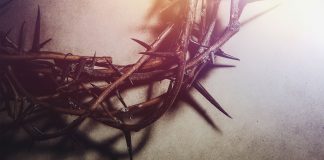
The greatest love
The word sacrifice is not really a pleasant word. When you hear it, you may think of weird archaic rituals involving blood and animals. You may think of giving up something you love or like to save money or to save your waistline. Sacrifice is not a word we use often, and it’s often used with negative associations. But in a strange twist, the action...