














Lou, the woman with no regrets left
Any sacrifice is hard to understand from the outside. But it's even harder to understand how sacrifice can be a choice that brings joy to the person making it. The easiest people to include in this category are, of course, mothers. For them, the sacrifices never seem too many or too hard. Even more amazing are those mothers who raise other people's unwanted...
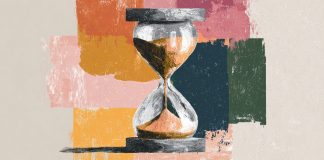
Remedies for “immediatism”
We live in an era defined by speed, where everything, from information to personal gratification, seems to be just the push of a button away.

When love ties us too tightly
"Love means never having to say you're sorry." When I first heard this line from the "Love Story" blockbuster, I thought I was the only one who didn't understand what it meant. However, after watching a recent interview with the lead actress, I was reassured. She too thought it was a stupid thing to say. Still, the phrase was a hit at the...

The discovery of our century: t = t
"There is a time for everything, and a season for every activity under the heavens" (Ecclesiastes 3:1).

How to enjoy closeness in your relationship with God
Could we have a quality Christian ministry without an authentic relationship with God? Anyone can pretend in the short term, but to truly succeed in the long term you need a devotional life full of passion and a continual closeness to Jesus Christ.

What happens in your body after you quit smoking
Our bodies reap the first benefits of giving up smoking almost immediately after we have ceased the habit. The scientifically proven changes that are visible within the next hours, days, months and even years after we quit smoking reinforce the fact that putting out that last cigarette is one of the best decisions you will ever make for the benefit of personal health.

The forgotten sign
On May 19th, 1780, a strange phenomenon turned a sunny morning into an unexpected night. The event, known as the Dark Day, was seen as a sign of divine judgment by contemporaries and as a means of ridiculing apocalyptic expectations by sceptics.

Scars that heal
He had made the mistake of asking the doctors for a mirror. Terrified, he saw a monster reflected in it. Lying on the hospital bed, after the doctor left, he pulled on the tube he thought was keeping him alive. He had no reason to live.

He believes and what he believes comes into being
Very few people have ever found rest in what they are and what they do. They are always seeking what they do not have and trying to become what they are not. These people talk about transformation, development and fulfilment but no matter their accomplishments or status, they are always thinking that they need to surpass their present state, that there is something...
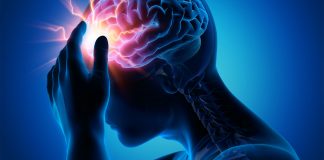
On the side of God and logic
Benjamin Solomon Carson is the famous American neurosurgeon who was the first to successfully separate conjoined twins in 1987.

COVID-19 and religious freedom
Because the pandemic and the various restrictions that come with it have been prolonged, some Christians have begun to feel that some of these restrictions violate their religious freedom, or freedom in general, which could turn into a restriction of the exercise of the religious act at some point. Are the health policies that are meant to stop the spread of COVID-19 in...

Five steps to change your money mindset
Do you remember the man who was supposed to marry Rose in Titanic? He dressed exceptionally well, had slick brown hair and was from a family of great wealth. His character was based on the life of a man named Caledon Hockey. He survived the shipwreck but not the Wall Street Crash. When the stock market fell in 1929, Cal’s money and everyone else’s plummeted...

Raising contented children
Kayley lies on the floor, throwing a tantrum because she only has pink flashing-heel shoes and she wants a blue pair to match her new jeans. John sits on the floor, happily playing with a few blocks of wood. His dad found them lying in the street, brought them home and sanded them smooth. Yesterday he stacked them up to build a castle....

Every family has a story | Why you should know yours
“We all feel stronger if we are part of a tapestry. One thread alone is weak, but, woven into something larger, surrounded by other threads, it is more difficult to unravel,” says family therapist Stefan Walters, summarising the benefits of understanding the history of the family we come from.

I love you for your flaws too
Love is the most beautiful and perhaps the most incomprehensible thing in the world. We find it in movies, in books, in the strength of a "yes" declared before the civil authorities, and in the embrace that binds spouses at the end of a hard day's work.