













The false cause fallacy: Is dawn summoned by the rooster’s song?
From an early age I learned, from the advice of adults or from my own experiences—and sometimes the hard way—the relationship between cause and effect. It's simple: if you touch the hot oven door, you’ll get burned! Subsequently, I discovered that there are a multitude of pressing uncertainties all around us in daily life. To figure out what actually causes the things that...

The road home
The miracle of modern technology today is idealised by almost everyone. The way in which technology has placed the world at our feet, ensuring that we are at the centre of the universe even while lying on our couches, and that we find solutions simply by swiping our finger along a screen, has irredeemably conquered us.

Why it’s important to have New Year’s resolutions
New Year’s resolutions are beneficial, according to experts at the Sacramento State University, who found that this method is 10 times more effective for successfully meeting goals over a longer period of time than the method chosen by those who decide to change certain aspects of their lives at another time of the year.

What should we do about prejudice?
We walk into a room full of people and from the first second, we draw a conclusion about how we will feel in their company. And often what we intuited happens. How is this possible?

When the face of the world changes | The epistemological significance of the Protestant Reformation
After Jesus was born—that is, in the era we call Anno Domini (AD)—the history of mankind was different from that of Christianity. As it is known, the latter was not the history of a triumphant march of Christianity towards its universalization and the unification of the human race. On the contrary, this history can rather be characterised as a manifestation of “the great...

War does not carry toys in its backpack
When war steps out of the pages of history books and into the real world, it resonates with a harsh, cutting tone, becoming a seismic record of humanity’s darkest nightmares. The recurring faces of war’s hideous nature show that, no matter how advanced human civilization becomes, moral evil doesn’t disappear—it merely gets passed down from generation to generation, patiently waiting for the right...

Two steps back, but three steps forward
On the morning of the 15 November 2016, I awoke in a hospital bed, with no memory of how I got there. My favourite pyjamas had been torn from my body, and I lay in a hospital gown, a piercing pain in my head, impaling my brain. I was barely able to think and incapable of speech. I was scared, though this was...

A slice of heaven
Several years ago, I had the opportunity to tour south Te Waipounamu (the South Island of Aotearoa New Zealand). Flying first into Invercargill, I made my way north, excitedly anticipating iconic tourist spots such as Queenstown, Milford Sound, Wanaka and more. However, on the way, the sleepy town of Te Anau caught me by surprise, captivating me in a way that I didn’t...
The opposite of love is not hatred (part 1)
For centuries, the sacrifice of God the Son and the divine plan for man’s salvation have generated several dilemmas and raised more questions than we could imagine. And the answers that have been found have revealed more implications of the cross than we used to believe, whether we are Christians or non-Christians, believers or skeptics.

I shall not hate
Izzeldin Abuelaish wrote a book titled I Shall Not Hate, now translated into 13 languages, about the hatred that led to the death of his daughters. "Hate is a poison, a fire which burns you from the inside," he writes.

“In the ferocious world beneath the heavens”
Looking back, I realize how the ferocious world beneath the heavens is tamed, at crucial moments, through communication on that biblical Ladder of Jacob.

Logotherapy and the meaning that brings healing
Happiness must come naturally – and this is true for success: you must let it happen simply by not obsessing over it.

The hour of His judgment
The judgment of God is the greatest demonstration of His justice in the universe—the other side of the coin bearing the image of the Cross. In God, love and faithfulness meet together; righteousness and peace kiss each other (Psalm 85:10).

Raising contented children
Kayley lies on the floor, throwing a tantrum because she only has pink flashing-heel shoes and she wants a blue pair to match her new jeans. John sits on the floor, happily playing with a few blocks of wood. His dad found them lying in the street, brought them home and sanded them smooth. Yesterday he stacked them up to build a castle....
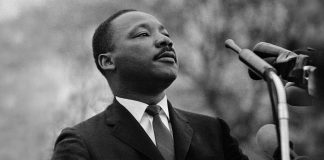
Martin Luther King, Jr. | What have we to do with heroes?
On August 28, 2011, when the Martin Luther King, Jr. Memorial was opened to the public in Washington D.C., 48 years had passed since the famous “I have a dream” speech by the young African-American Baptist pastor.