












The Bible as a sign of offence
“‘The days are coming,’ declares the Sovereign Lord, ‘when I will send a famine through the land—not a famine of food or a thirst for water, but a famine of hearing the words of the Lord. People will stagger from sea to sea and wander from north to east, searching for the word of the Lord, but they will not find it’” (Amos...

Peace of mind, and peace forever
Peace I leave with you; my peace I give you. I do not give to you as the world gives. Do not let your hearts be troubled and do not be afraid. – John 14:27
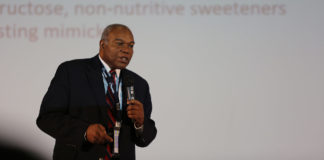
“Don’t you have a lifestyle pill?” An interview with Dr Zeno L. Charles-Marcel
Dr Zeno L. Charles-Marcel is an associate director in the Department of Health for the General Conference of the Seventh-day Adventist Church.
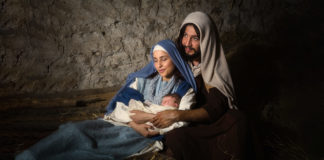
Joseph of Nazareth: The virgin’s husband and the Son’s father
He married a pregnant woman and accepted the responsibility of raising and educating a Son who was, because of His divine power, his Father. This was a mission full of risks and challenges for a humble carpenter from Nazareth, who has come to attract the attention and respect of generations.

The dilemma of parents raising their children under pressure
Lucy is an 8-year-old girl who has a range of interests broader than that of an ordinary adult. She is enrolled in an international school, where classes are taught in French by native speakers. Her classmates are children of expats from different cultures, which amuses her nanny, who, when picking her up from school, says that she "took her from the children's UN."

The God of love, the God of justice
Centuries ago, the German theologian and philosopher Gottfried Wilhelm Leibniz used the term “theodicy”1 for the first time—“God’s justification”. By theodicy, Leibniz meant the ultimate reality of justification, once and for all, of God and all of His ways before the whole universe.

Introverts and their road to success
They would rather work alone or in small teams, they do not wish to draw attention, they love quiet, less stimulating environments, and they need time to make decisions. With this general profile, introverts seem to have a slim chance of prospering in a society that usually rewards extroverts—unless they learn to harness their strengths.

The revival of Christian morality
"With architecture we build buildings, with mechanics we build machines; is there no place among the sciences for one dedicated to human beings? Ethics is capable of working out the principles according to which a person must be 'built' in order to be truly human" (Traian Herseni).

Slippery slopes and anxious feet
The fact that we are able to anticipate most of the consequences of our actions is undoubtedly a blessing. However, we can also allow fear or over-cautiousness to make us anticipate events that are not likely to follow. This edges us toward a common error of judgement: the slippery slope.

Education: between the crisis of models and the source of models
Education is not the same as schooling. The role of the family, the group of friends, the community, the church, and so on must harmoniously complement the school's role in this process. However, in the end, anyone who wants to succeed in life will work on their personality and self-education.
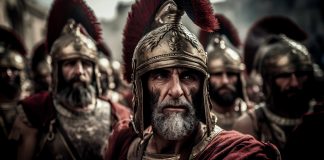
Three times the world nearly ended
Many doomsayers have “cried wolf” when it comes to the end of the world. Does that mean it’s not going to happen at all?

How to strengthen your willpower to make the best decisions
To have willpower does not mean saying you want to do something, it means to actually be doing it—André Maurois

Why it’s important to have New Year’s resolutions
New Year’s resolutions are beneficial, according to experts at the Sacramento State University, who found that this method is 10 times more effective for successfully meeting goals over a longer period of time than the method chosen by those who decide to change certain aspects of their lives at another time of the year.

The emancipation of a free man
Louis Zamperini experienced the bizarre smell of death so many times that he came to the verge of losing his mind. However, he survived, and by choosing to forgive the unforgivable, he was able to breathe life into an entire world.

Parenting school: the counsellor and consultant phases
This article is the third and last in the "Parenting School" series. The first two parts were published in the May and June 2020 issues of Semnele Timpului, the Romanian version of the ST Network.