













What did Jesus believe about hell?
In Dante Aligheri's Divine Comedy, written in the early 14th century, hell is described as a "city of woe" and a place of "eternal pain"—metaphors of endless suffering.

Jesus and the Goddess of Reason | Thomas Paine and the trap of contemporary deism
"I believe in one God, and no more; and I hope for happiness beyond this life." This is how one of the most famous leaders of the American Revolution and an influential political writer of the late 18th century-Thomas Paine (1737-1809)-begins his testimony of faith. A few lines later in the same book, The Age of Reason, after vehemently rejecting the creed of...

How parenting has turned into a strategy game
One of the most striking changes in contemporary parenting is the way it is starting to resemble a well-designed video game, which can make players become addicted. But what happens to parents who feel they are losing the game?

Gentle parenting and the illusion of perfect choices
Gentle parenting—how did this seemingly wholesome phrase come to elicit such strong negative reactions as contempt, sarcasm, and condescension?

What the Christian mission gains and loses in the age of AI
Christianity has never missed an opportunity to engage with major communication technologies. In fact, it has always found ways to transform them into vehicles for its mission. However, this adaptation has always come at a price. Today, in the midst of the artificial intelligence revolution, what will the Christian mission gain and lose?

A deeper understanding of God
Daniel Bruneau’s parents, who hail from Mauritius and the Seychelles respectively, met in England. When Daniel came to Atlanta to teach at the university, he wanted to deepen his relationship with God.

“More than a carpenter” | Book review
Josh McDowell, founder of the trans-denominational Christian organisation Campus Crusade for Christ and author of More Than a Carpenter, is known to the public after a decades-long career and having had several volumes published in the field of apologetics.

Facing the two doors: which one will you choose?
No other court in the world can judge a person as effectively as their own conscience. Before and immediately after a wrong has been committed, the "merciless" trial begins.

“If the paper screen is closed, it means I’ve died”
When a closed window shade becomes an SOS sent by those used to living on their own but afraid of dying alone, something has fundamentally changed in a society that not long ago valued human relationships.

Five reasons why I have faith in God
Faith has brought me not only a sense of God's presence, but also evidence that He is answering our requests. Therefore, the other reasons that made me believe have become stronger.

Learning from Wave Rock
If you’re reading this article in July of 2024, there’s a good chance I already have climbed or am currently climbing Wave Rock. Called Katter Kich in the Nyungar dialect, Wave Rock is an enormous granite cliff face in the shape of—you guessed it—a wave that protrudes from the surface of the earth in the middle of Western Australia’s Wheatbelt. It forms the...
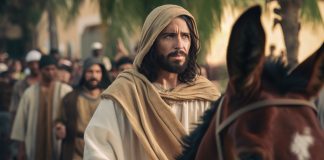
The prophecy of the Messiah
Daniel chapter 9 contains what many consider to be the most sublime prophecy of the Old Testament—a prophecy of the Messiah, Jesus Christ. Amazingly, not only did this prophecy reveal the purpose of His incarnation as a child, but it also specified when His ministry would begin and when He would die.

The late gospels and apocryphal Christianity
It was the first time most Christians had heard of the Gnostics— communities of Christians who lived between the 2nd and 4th centuries and whose scriptures and spiritual beliefs bore little resemblance to what is now considered traditional Christianity.

The Pentecostal movement: Pentecostalism and the Reformation
Pentecostalism has its origin in the Greek word Pentecost, which means “fifty” and refers to the receiving of the Holy Spirit by the apostles on the feast of Pentecost in Jerusalem, followed by speaking in tongues (glossolalia). However, this Pentecostal phenomenon predates the Pentecostal movement which began at the beginning of the 20th century.

Temperance: the lost virtue
Temperance was once upheld by philosophers, saints and stoics. In a world dominated by indulgence, its call to balance feels more relevant than ever.