













Education: between the crisis of models and the source of models
Education is not the same as schooling. The role of the family, the group of friends, the community, the church, and so on must harmoniously complement the school's role in this process. However, in the end, anyone who wants to succeed in life will work on their personality and self-education.

COVID-19: What have we learned about ourselves?
Courage is not the opposite of fear, nor of caution. True courage is what you do right in the midst of fear.

How to sleep well in the age of anxiety
Sleep is perhaps the most important, complicated, and misunderstood physiological mechanism that keeps us alive.

The golden handcuffs and the new religion of work
An old Romanian proverb states that craft is like a golden bracelet. But the way we relate to this type of jewellery seems to suggest that these golden bracelets are more like some socially acceptable handcuffs, which we fooled ourselves into wearing with pride.

Affluenza: What does your money say about you?
If life were merely about money, it would be like a game of Monopoly. At the end of the game, you’d count your cash, add up the value of your assets and find out whether you’d won or lost. Then you’d breathe your last.

Depression and the soul’s immune system
“You will keep in perfect peace those whose minds are steadfast, because they trust in you,” wrote the prophet Isaiah—and some jumped to the conclusion that those who do not experience peace do so because they lack a sound mind or faith.

8 signs that show you are an introvert
Detecting an introvert is not as easy as we may think, because sometimes introverts are not shy or silent at all, they take responsibility, work extraordinarily in teams, and can even be skilled public speakers. Yet several traits can unveil the introverted character of an individual.

Learn to fight smart in your relationship
Couples do not break up because they fight, but because they do not know how to argue, relationship therapists say, underlining the functional components of the differences between partners.

The limits of education and education with limits
In the book, "Sisyphus: Or the Limits of Education," first published in German in 1925 by Siegfried Bemfeld, it is stated that education is limited by the personalities of the adults who take care of the children or students, the personalities of the educated, and the social environment in which the educational act takes place.

No laughing matter
We’ve all been guilty of memory lapses at times—forgetting a birthday or anniversary, that needed ingredient we were supposed to pick up at the grocery store, where we put our car keys, even where we parked the car. And mostly we just joke about these memory lapses and tease each other about them. However, for some 50 million people around the world who...

The “background noise” of free will
What would you say if you read an article that tells you that the human ability to make choices freely and consciously—that is, free will—might just be an illusion? What if the article backs up its claims with scientific research? Such curiosity is sparked by an article published on livescience.com.
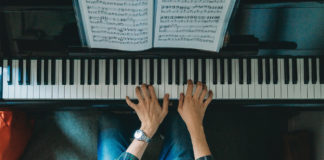
The surprising effects of music on the brain
People have always loved and cherished music, investing time into both composing and listening to it. Journalists from The New York Times sought to find the reason behind our deep attachment to this intangible thing that, for most of us, yields no material gain.

Loving till we see an end to sad stories
We carry sad stories with us, and the meaning of these stories often eludes us. What if we discovered that these stories provide unique opportunities to change lives? Cori Salchert discovered, through family tragedy, the resolve and desire to take care of children with terminal illnesses.

When silence is not love
We often associate divorce with the unhappiness of adults who reprehensibly decide to go their separate ways. For under-age brides Noora and Nujood, however, divorce was their escape from a nightmare of domestic violence and abuse, into which they were thrown at a young age by their own families.

The hour of His judgment
The judgment of God is the greatest demonstration of His justice in the universe—the other side of the coin bearing the image of the Cross. In God, love and faithfulness meet together; righteousness and peace kiss each other (Psalm 85:10).