












How does God answer prayers?
“I will stand at my watch and station myself on the ramparts; I will look to see what he will say to me” (Habakkuk 2:1).
The theological masterpiece of the Reformation
Written in Latin by a 26-year-old Frenchman in less than a year, it is a book of 516 pages. Published in Switzerland and dedicated to the French king from whom he was fleeing, it is the most important theological work of the Reformation.
Gethsemane, the garden of the divine sighs
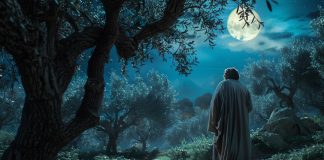
As soon as the tourists leave the land of the silent agony of Gethsemane, their lives return to normal, and the garden where the Son of God sobbed in indescribable pain, misunderstood and unsupported even by His closest disciples, sinks back into oblivion.

Life-giving depression
It’s an invisible force, lurking and weighing heavily within, gradually convincing you that life isn’t worth much, that it’s better to let go. From the depths of depression, the journey back is incredibly tough, but not impossible. Kevin Breel is one of those people who can attest to this.


The Second Coming of Christ | Between curiosity and expectation
The Second Coming of Jesus Christ is a cardinal doctrine of the Bible. Daniel, Revelation, and the eschatological passages in the Gospels are the main sources of Christian eschatology. The theological world is divided into several schools of interpretation, and eschatology remains fascinating because of the uncertainty it generates.

COVID-19 complications, during and after the disease
It will soon be two years since the virus known as COVID-19 started to roam around the world. The sad toll of this disease—over 5 million victims worldwide—is still incomplete, because we are far from seeing an end to the pandemic. It has been the largest public health crisis in the last century.
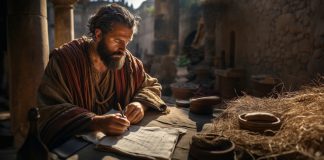
The fascinating Gospel of John
Dr Kendra Haloviak-Valentine, Professor of New Testament Studies at La Sierra University in Redlands, California, comes from a family with a tradition of theology and research.

The casino inside your phone
In the February 2023 issue of Signs of the Times, I wrote an article titled Gambling’s Dark Underbelly. Here in Australia, gambling is a multi-billion-dollar industry with a few very rich winners and millions of losers. In the article I concluded that “Gambling in any form is designed to bleed you for as long as you’re willing to bleed, with no regard for...

The Great Reset: a revolution that has been proposed before
Every January, economic and governmental elites gather in their hundreds in Davos, the exclusive ski resort in Switzerland, where the World Economic Forum holds its annual high-level meeting. This year, because of the pandemic, the in-person meeting had to be rescheduled. But the controversies surrounding the meeting's theme – The Great Reset – were not postponed.

“Why do others love Jesus differently than we do?”
As strange as this question may seem, it is also difficult and has consequences that are not at all negligible. Even if it is not always phrased like this, or perhaps not even spoken out loud, this question arises in every home.

“God is against all forms of contraception.” True or false?
Did you know that if the current rate of population growth continues, the world's population will double in the next 40 years? Did you also know that if all available food resources on Earth were used to feed people, it would only be able to support 15 billion of us?

The invasion of thoughts that endlessly postpone our happiness
The inability of the mind to concentrate on what one is experiencing in a particular moment has the effect of overshadowing the joy of a day, even when the subject of the wandering thoughts is as pleasant as can be.

Judge and jury
I once served on a jury and, to my surprise, was voted foreman. The accused was charged with manslaughter, a serious crime with quite a harsh penalty; while driving an aged-care minivan filled with pensioners, he’d hit and killed a pedestrian. The defendant was a facility volunteer who had been taking a group of pensioners shopping. His vehicle collided with the deceased in...
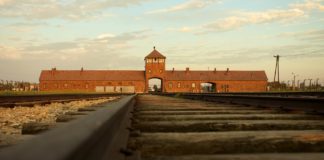
God on trial
The scenario in which God is a judge and His creatures are subject to His judgment culminates, in the Bible, with a happy ending for all lovers of righteousness. But what would be the end of a situation in which God is the accused in a trial instituted by His creatures? Whose ending would be happy?