












COVID-19: Hope overcomes the fear of the unknown
In the spring of 1936, the members of the Lykov family made a decision that would change their lives forever: they disappeared into the Siberian taiga, completely isolating themselves from the world for the next 40 years.

The slow-paced family
Women work an average of 68 hours per week, while men work 55 hours—a total that includes both professional commitments and household responsibilities. This was the conclusion of a 2007 study conducted by sociologists at the University of Cambridge across European Union countries.

COVID-19: What I have learned from my Italian friends
Antonio is a grandfather of 69 years old. For 40 years, he has worked as an internist. Just a few days ago, his plans for a quiet retirement suddenly changed. Out of his own free will, Antonio decided to return to work as a doctor in order to help patients suffering from COVID-19.

No one deserves to have that much money
In a dilapidated shack in Nairobi, a young woman makes her confession to the BBC reporter eager to hear her story: “I don’t know why God allows some people to be poor while others are rich.”
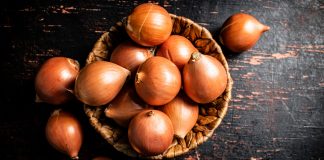
God and the onion test
Humans have only a fifth of the genetic material of an onion, and slightly more DNA than a mouse. Why would the Creator of life use five times more genetic information for an onion than for a human? And why would He create humans to be only slightly more genetically complex than mice? Aren't long and aimless evolutionary processes a better explanation for...

“Thanks for coming over!” | Ageing and social relationships
Our number of friends tends to decrease as we get older, but this trend, which has many negative effects, can be actively combated even when old age has already set in.

The colours of silence
The hues of the rainbow, once considered the seal of peace between God and humanity in the Bible, have, in just a few years, become the symbol of an ideological conflict among people in a society where the “shame axis” spins according to the dictates of the public agenda.

How disposable are you?
How do we value a human’s life? Should we rate lives on their value to their community? That would mean a life-saving surgeon would have more value than someone living on the street. Or is it potential—which would make a baby more valuable than a 50-year-old? What about the value we place on those later in life versus those at the end?

The spring of happiness never runs dry
Immersed in contemplation, I eagerly remove the gnarled, wet roots. As my thoughts drew closer to the tenuous yet vigorous spring beneath them, a word intersected my search like an intense beam of light. Harmony. I felt as if the tips of my thoughts had reached the source of the experience I was trying to decipher—happiness.

The mystery of the seventh day (III)—Was Jesus a legalist?
In the first two articles of this series, we examined the biblical theology of the Sabbath in relation to the divine act of creation, the history and theology of the people of Israel and early Christianity. This third and final article in the series will examine the Sabbath from the perspective of legalism, under which some commentators have placed seventh-day observance.

To those who loved us first | The ageing of our parents
If the death of our parents is a blow which makes “the very fabric of life…buckle and cave in,” the ageing of our parents resembles a classroom where we learn to give more than we are used to receiving.

Under pressure
While for many the experience of pregnancy is full of excitement, for some first-time mothers, it can be a struggle with the unknown. For newlywed Shannon Toledo, her complicated health issues were adding another variable to the morning sickness, mood swings and the uncertainty with her job during the peak of Covid-19. A part-time martial arts instructor with a third-degree black belt in Taekwondo...

Bewilderment
Jesus’s unpredictability is one of His most memorable traits—one that was, however, not born out of an extraordinary speculative intelligence, but out of such a different perspective on reality that even the most trained and educated thinkers could not foresee it. Therefore, Jesus’s unpredictability says more about us than about Him.
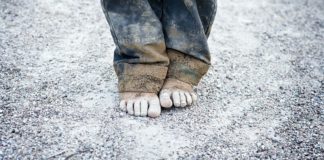
”The coronavirus has been anything but a great equalizer.” The impact of COVID-19 on the world’s poor
A famine of biblical scale is already looming on the horizon, says David Beasley, director of the World Food Program. More than 30 developing countries could be affected by the scourge – 1 million people are already affected. It's not just people going to bed hungry, Beasley insists, explaining that it's a state of emergency where outside help is the only hope.

The role of Christian marriage counselling
Isaac and Rebecca, two biblical characters, had problems in their marriage. At first they struggled to fall pregnant. Then, when she eventually got pregnant, it was a difficult pregnancy, which affected them very much—so much so that they didn't know what to do. I suppose they had all sorts of discussions about the situation, but at some point the discomfort just became too...