






Mother by profession
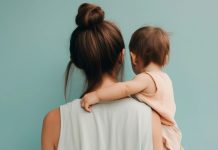
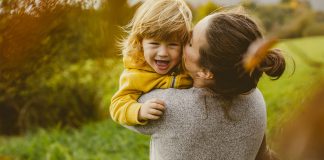
Raising a child is not easy at all. Raising someone else’s child is even harder. But raising six children who are not your own, giving up your life, sounds crazy to most of us.

“AI 2027” and the end of humanity
The authors of AI 2027 predict two horrifying possible futures. The Bible insists neither is the final word.
The fascinating Gospel of John
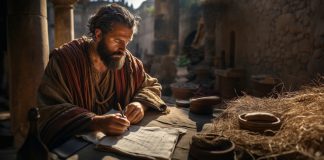
Dr Kendra Haloviak-Valentine, Professor of New Testament Studies at La Sierra University in Redlands, California, comes from a family with a tradition of theology and research.
Life after lockdown: a return to the rat race?
On any given day, a typical person checks the clock several dozen times.

The great COVID-19 supermarket stampede
Last year, most of us were blindsided when we entered our local supermarket, trudged down the toilet paper aisle and were confronted with extended shelves of emptiness. Somewhat disappointed and definitely a little bit anxious (especially if we were running low on the soft, white goodness), we began to wonder how long it would be before we sighted toilet paper again.
Book review: Juice
In my humble but literary-educated opinion, Tim Winton is Australia’s finest living novelist. Since winning publication of his first novel in a competition for young writers in 1981, he has had 10 more novels published, as well as collections of stories, plays, books for younger readers and a handful of non-fiction works. Winton has won Australia’s top literary prize—the Miles Franklin Award—on four...
Free to be responsible
Several simple experiments have shown that certain neural processes that are activated when performing an action increase in intensity with fractions of a second or even whole seconds before conscious thinking is informed about the performance of that action.
When fear of death does not let you live
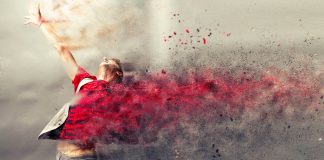
Anecdotally, they say that fear of public speaking is the biggest fear of mankind, after fear of death. Everyone smiles at this order of priorities, but no one disputes or discusses the fear at the top of the ranking.

How did Jesus view the Scriptures?
Jesus had the highest regard for the Scriptures. The Gospels show that He was familiar with the content of the Scriptures, which He saw as the final authority for establishing truth, rejecting temptation, and choosing the way forward in the present and the future.
Baptism by fire
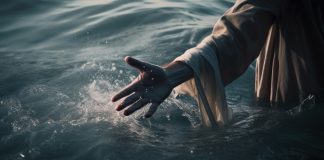
Probably no group in Christian history has been so unfairly judged as the Anabaptists.
The truth about ourselves
History doesn't resemble Hollywood films. However self-evident this statement may be, it still comes as at least a partial surprise to many who imagine that history, while not quite like the movies, is still pretty close to the dramatic depictions.

The illusion of deceit
In terms of short-term benefits to one's reputation, or monetary benefits, the illusion of deceit is intoxicating. But, in the long run, both from an individual and a social perspective, the negative effects of deceitful behaviours should be convincing enough in order to deter any and all from engaging in them.
Mothering in times of anxiety
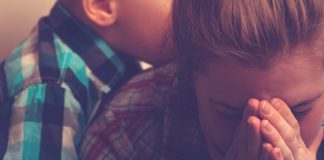
The young generations of women raised with the ideal of the family in which the man and the woman are team partners, equal both at home and outside it, discover that their expectations have taken precedence over the real course of society. The most surprised are, unpredictably, women who are highly educated.
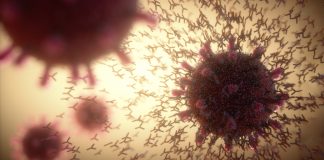
What is in the COVID-19 vaccines and what do they leave in the body?
What is in the COVID-19 vaccines? What remains in our system after each type of vaccine, and for how long?
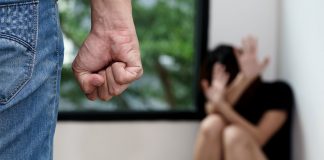
Brave enough to listen
There’s a saying that if it’s too good to be true then it usually is. But what if it’s too bad to be true? What if something is so shockingly horrendous that it makes you stop thinking about anything else for a while? Does that mean it’s a lie as well? The numbers associated with domestic violence are quite staggering—and when my own sister revealed...