










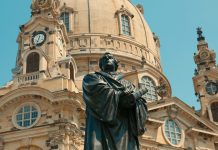



“God, Gödel, and Grace” by Clifford Goldstein | You have reasons to believe
There have always been people who relish a debate—though all too often, even when the subject hardly matters, the whole exercise amounts to little more than intellectual gymnastics in a thimble and scholarly squabbles over how many angels can dance on the head of a pin.
R(el)ational faith
In the maximalist search for evidence that can justify our belief and, at the same time, help us defend our reputation, something is lost: the very concept of faith.

Reconnecting to the world we live in
What Indigenous peoples have long understood about our relationship with the natural world.

How to develop your creativity every day
Even if half of us refer to creativity as a rare trait that only the other half has, in reality, creativity is much like a muscle: the more we use it, the more creative we become.
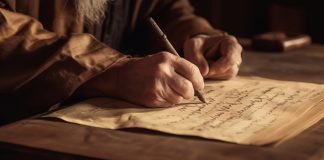
Augustine, the man of the millennium
His philosophy and theology dominated human thought for over a thousand years. Until Thomas Aquinas emerged in the 13th century, Augustine was undoubtedly the most important thinker of the medieval period.

Never enough likes
The American Economic Review recently published the results of the largest randomized study ever conducted to measure the impact on the quality of life that deactivation ones Facebook account might have.

The false dilemma: Are there really only two choices?
The false dilemma fallacy presents an issue as if there are only two ways to solve it—often, two opposite ways—when, in fact, there are more ways than that. The conflict between the two ways presented is also false.

Jesus, the God who understands me
Sometimes, I wonder what I would be like if I were more like Jesus. Above all, I wonder how He would act in my situation. I have to admit that these questions sometimes leave me feeling lost.

The problem with chronic desiderative thinking
“Yeah, I understand what you’re saying about Christianity. I’ve been there, a long time ago, but now that I’ve moved on, I have a different relationship with the universe and things are going much better for me on all levels.”
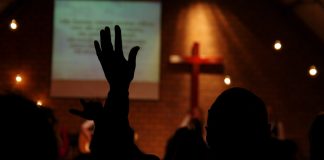
The rush for speaking in tongues
“The newest religious sect has started in Los Angeles. Meetings are held in a tumble-down shack on Azusa Street...and the devotees of the weird doctrine... work themselves into a state of mad excitement...They claim to have the ‘gift of tongues’ and to be able to understand the babel”.

Unmasking deception | A practical guide to a healthy internet experience
Exploring the internet and absorbing reliable information in order to shape our own views requires a complex set of knowledge and skills that help us distinguish between what is real and what is fabricated, between what is authentic and what is falsified.

From heartache to hopeful
It’s not hard to misinterpret the Bible. I’ve done it, most people I know have done it and if you’ve read it enough, I’d bet you’ve done it too. It isn’t surprising then, that throughout history many have misinterpreted the Bible, especially when it comes to complex ideas like the end of the world and Jesus’ second coming.


Trusting faith
An ordinary wooden chair is a metaphor that’s often used to talk about the key dynamics of faith. But it’s worth exploring further. Perhaps we could describe this as a process of developing the theory of a chair.

The letter that did not get lost
Denisa Selagea has lost many things so far, from keys and phones to patience and opportunities. She has also lost sight of many words that needed to be said. So, this time, she thought she would stitch them onto paper before they got lost, to be read before it’s too late.