











Burma to Brisbane: Esther Moo’s story
Let me paint you a picture of Esther Moo’s life, one of approximately 1959 Karen refugees who migrated to Australia between 2009 and 2010.

How risk-free is alcohol tasting as a child?
To offer one’s child a sip of alcohol during mealtime or for other special occasions is not as rare as one might like to believe. Even if parents believe that a controlled start to alcohol consumption is protection from bingeing later on, the reality is that alcohol tasting in childhood generates major risks for the child’s development.

The happiest people in the pandemic
“How can we rejoice if we’re at war?” This was one of the questions that arose in my mind after reading a book comprised of testimonies of people who experienced World War II as children. Decades after this nightmare, and stricken by a crisis that casts its shadow over people and nations everywhere, the question remains: can we still be happy in times...
“I can’t breathe.” An African-American tragedy engulfing the USA
Streets paved with broken glass, cars burning, shops looted, a vandalized CNN headquarters, street fights, Washington DC under siege, thousands of arrests – the US is "at war with itself", and to probe why has it reached such a point we must look beyond the tip of the iceberg.
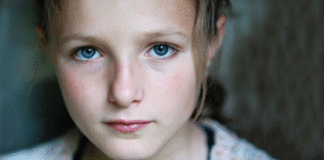
Fragments of light in the dark
When it was close, when I first saw its truly hideous face, I realised that I would never get used to it. And, no matter how hard I tried, no matter how much hope I tried to gather, I found nothing bright or inspiring about death. I know I will never find such a brightness, because it doesn't exist. But I saw the...

Only childhood makes us whole
While browsing through a folder of old documents, I rediscovered some poems written during my student years. One of them drew my attention because of a verse that resonated with me from the beginning: Only childhood makes us whole.
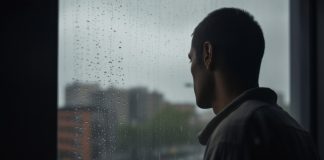
A sad soul is one whose lights have been turned off
Depression, sadness, melancholy, sorrow and despair are universal human states of mind that have given rise to distinct cultures, with nuances specific to different eras and places. These cultures have manifested themselves in everything from poems and songs to philosophical concepts. However, while we acknowledge the creativity that can arise from suffering, like a pearl formed from an oyster's irritation, our focus is...

What did I miss about God in my 20s?
I was twenty when I first became curious about God. I was fortunate to see His presence in the lives of my friends and longed for that same presence in my own life.
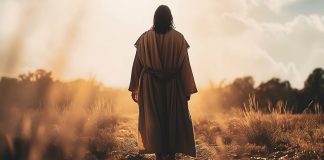
The Jesus that defies definition
You have heard that it was said, ‘Eye for eye, and tooth for tooth.’ But I tell you, do not resist an evil person. If anyone slaps you on the right cheek, turn to them the other cheek also” (Matthew 5:38,39).
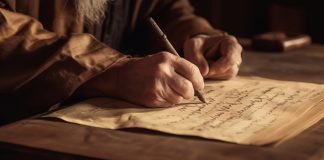
Augustine, the man of the millennium
His philosophy and theology dominated human thought for over a thousand years. Until Thomas Aquinas emerged in the 13th century, Augustine was undoubtedly the most important thinker of the medieval period.

Holidays when you’re not feeling good
The December days that start with the number 2—that is, starting from the 20th—are like a train with batteries on a closed circuit. They pass, with the twinkle of LEDs, like carriages loaded with emotions about the past, about the future and about the present, with nostalgia and regret, with delight, and with fear and worry: a mixture that we enjoy with the...

Trailblazers
A former drug addict and a woman with a dark past are not exactly the kind of people one would look up to. However, Evgheni and Svetlana Isaev have shown that the past does not prevent anyone from completely changing their lives and becoming the pride of a nation.

What if I don’t need God?
Far more terrifying than persecution, ideologies, and militant atheism put together may be the hidden force behind the seemingly innocuous statement: "You don't need God!"

The love that whittles all my fears away
In a psalm that is worth reading on our coldest mornings and in our darkest nights, King David asked some rhetorical questions—“Whom shall I fear? Of whom shall I be afraid?”— questions which our contemporaries would not dare to answer.