











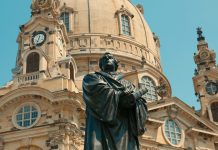

Louis Braille | The blind man who opened their eyes
Louis Braille said: "God was pleased to hold before my eyes the dazzling splendours of eternal hope. After that, doesn't it seem that nothing could keep me bound to the earth?"

The Ten Commandments
The book of Exodus is the second book in the Bible. It follows God’s servant Moses leading the Israelites out of slavery and through the desert towards the hoped-for Promised Land. Along the way, they stop at Mt Sinai. Moses goes up the mountain and receives from God ten commandments carved on a stone tablet. This is one of the most famous sections...
The darker side of our world
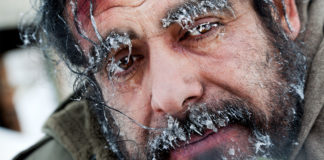
The world of the homeless is the darker side of our world. It is inhabited by vagrants, drug addicts, and the powerless. This world has its own rules, customs, pleasures, and pains, but lacks meaning and peace. And those who enter this world struggle to leave it.

Not by sight
Born into a family of surfers, one could say the love of the salty ocean air courses through the veins of his body. Named after legendary surfer Derek Ho, even his name embodies the hopes and expectations of what he was to become.

Love does not give up
We love people for who they are. But there is a kind of love that is too high for us to truly comprehend in all its nuances, a love that manifests itself towards people no matter who they are or what they become. We find a love such as this in the beautiful story of Ian and Larissa.

An unusual preacher
Mass evangelism “campaigns” have become a common phenomenon in contemporary religious culture. However, few people ask how it all started and what are its long-term effects.
What the Christian mission gains and loses in the age of AI
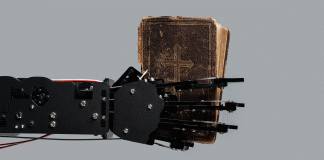
Christianity has never missed an opportunity to engage with major communication technologies. In fact, it has always found ways to transform them into vehicles for its mission. However, this adaptation has always come at a price. Today, in the midst of the artificial intelligence revolution, what will the Christian mission gain and lose?
How to cherish the obstacles in your life
“What doesn’t kill you makes you stronger,” said Nietzsche in one of his essays back in 1889. Easier said than done when you’re facing unemployment, illness, rejection, or a blank exam paper. We tend to see these as things we need to get rid of. This can’t possibly be the life we wanted.

“Divine Providence: God’s Love and Human Freedom” | Book review
Bruce Reichenbach's book, Divine Providence: God’s Love and Human Freedom is impressive first of all due to the author’s total disinterest in impressing his readers. Instead, he has a legacy to pass on.

Do you know your child’s love language?
In 1997, Dr Gary Chapman released the book "The 5 Love Languages of Children" as a follow-up to his bestseller, "The Five Love Languages."

The surprising effects of music on the brain
People have always loved and cherished music, investing time into both composing and listening to it. Journalists from The New York Times sought to find the reason behind our deep attachment to this intangible thing that, for most of us, yields no material gain.

The miracle of the ordinary | Rediscovering transcendence in simplicity
In our desperate search for miraculous answers or confirmations, we often forget that the most profound miracles are hidden in the seemingly mundane details of our lives.

How to give your money away and make it count
A seemingly endless stream of needy causes compete for our attention and money every day. Our emails, mailboxes and phones are bombarded by charities asking for generous donations to help.

Bewilderment
Jesus’s unpredictability is one of His most memorable traits—one that was, however, not born out of an extraordinary speculative intelligence, but out of such a different perspective on reality that even the most trained and educated thinkers could not foresee it. Therefore, Jesus’s unpredictability says more about us than about Him.

Loving yourself, flaws and all
In a society that is more concerned with form than substance, character ranks second. It is the power of the image that dictates things.