














God’s providence in times of crisis
Regardless of the form they take, crises give rise to legitimate questions about God's providence: Where is God when we suffer? Has He forgotten us? Is He punishing us? Does He still have things under control?

An essential duo
Focusing on healthy eating while overlooking physical activity is not so much a myth as an uncomfortable truth that many of us prefer to ignore. Yet the rapid rise in sedentary lifestyles and metabolic diseases, with their harmful consequences for both individuals and society, is difficult to ignore.

“When doctors don’t know what to do, it’s time for alternative medicine.” True or false?
When it comes to cases where "doctors don't know what to do," the first thought that comes to mind is usually cancer. Conventional treatment, which can prolong life for a few years and sometimes just a few months, comes at a high price in the quality of life, and patients come to prefer the "natural" way: alternative medicine.

COVID-19 prevention series: An introduction
“A healthy lifestyle has been an important part of the beliefs of the Adventist Church since its early years and remains so. We are still committed to live, share, and promote healthy living as expressed by the holistic Adventist health message entrusted to the Church. The Adventist health studies have confirmed the unequivocal benefits of increased longevity and quality of life through implementing...

COVID-19: The new mirror in which we look at our parents
How can we encourage the elderly during this time? How can we help them understand that we don't want to lose them and that, although it's hard for them, we didn't abandon them. I have an elderly mother and, honestly, it would help me a lot. Can you write for me?

COVID-19: Why the Bible’s perspective on social distancing might be a solution
The great challenge facing the world’s leaders right now is identifying an optimal response to a disease bearing several characteristics that make it difficult to combat.

COVID-19 and the great question: Why?
The danger of the novel coronavirus has given us pause to reflect. As Christian believers, apart from praying, we are expected to examine and question our beliefs in this time, and to seek answers which are rooted in the perspective of the Holy Scriptures.

Evidence-based medicine: How to set a foundation for trusting the doctors
How can I be sure that the recommendations I receive after a medical consultation are correct? In the article below, we discuss evidence-based medicine.

They call it poppy love
I have an acutely vivid memory which triggered this article. It was a wet day in London in the winter of 2002. My 145kg frame was squished in the front seat of a tiny blue Fiat Punto with two colleagues in the parking lot of a Burger King.
Get your brain in shape
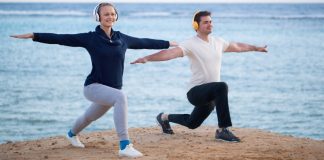
For a long time we’ve exercised for our physique. But studies are showing more and more the mind-blowing benefits exercise has on our brains.

Love in the Time of COVID-19
As we know all too well, life can be hard. Even in the best of times, life can be hard. But now this, a pandemic? How are we to cope?

Are you really okay?
Let me ask you a question: if a friend of yours or I were to stand in front of you today and ask, “Are you OK?” how would you respond? Could you, or would you, share how you really are? As a society, we seem to be becoming more and more aware of the mental health crisis we are in. On 8 September, Australia...

The first line of defence: Proven efficacy of wearing a mask in preventing SARS-CoV-2 infection
How important is wearing a mask for preventing SARS-CoV-2 infection? We must say, at the outset, that wearing a mask remains important in preventing SARS-CoV-2 infection, especially because the "delta plus" variant has a high potential for contagion.

No laughing matter
We’ve all been guilty of memory lapses at times—forgetting a birthday or anniversary, that needed ingredient we were supposed to pick up at the grocery store, where we put our car keys, even where we parked the car. And mostly we just joke about these memory lapses and tease each other about them. However, for some 50 million people around the world who...
COVID-19: How has it affected young people?
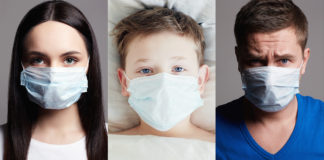
Early reports out of China showed that elderly people and the chronically ill were most vulnerable to Covid-19. Yet an alarming number of young people in the United States have been hospitalized with severe infections. According to the Centers for Disease Control and Prevention, nearly 40% of American Covid-19 patients who were hospitalized were under 55 – and 20% were between ages 20...