











Big moments
"Answer according to who you are, not who you would like to be,” the website tells me. The banner above this statement announces a quiz that will help me discover my spiritual gifts. All the personality tests I’ve completed in the past usually just remind me of some of my deeper characteristics. This test, however, is all about how I can apply who...

The man who opened the windows of heaven
"Who were the two artists of ancient times who competed to see who could paint the visible world most faithfully? 'Now I shall prove to you that I am the best,' said the first, showing the other a curtain which he had painted. 'Well, draw back the curtain,' said the adversary, 'and let us see the picture.' 'The curtain is the picture,' replied...
The tree that overshadowed the earth
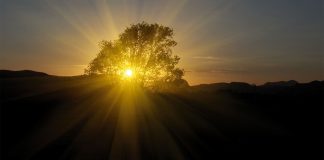
"[Jesus] told them another parable: 'The kingdom of heaven is like a mustard seed, which a man took and planted in his field. Though it is the smallest of all seeds, yet when it grows, it is the largest of garden plants and becomes a tree, so that the birds come and perch in its branches.' He told them still another parable: 'The...
When all that’s left to do is pray
“All I can do is pray and hope.” With those words, I ended an article on infertility. After years of marriage and not one pregnancy, I did one of the only things I could do to help me process the fact that my wife and I might never have children: I wrote about it.

The ties of love
“Truly I tell you, if you have faith as small as a mustard seed, you can say to this mountain, ‘Move from here to there,’ and it will move. Nothing will be impossible for you” (Matthew 17:20).

How should I apologise?
Asking for forgiveness is one of the most dignified things a person can do when they have done something wrong. But asking God for forgiveness is more than that: it's bowing down to the highest authority, and it's also appeasing the Infinite. What do we need to know when we ask God for forgiveness?

Finding comfort in discomfort
It's been a few weeks since we moved house. After just two years in which we had managed to adapt, once again everything has changed: the environment that is closer to nature, the temperature, the housing, the placement of things in the house, the daily schedule, the children's school, the type of people we come into contact with, the type of activities, the...

The source of motivation
Motivation is more than simply having the desire to wake up each morning with enthusiasm and a zest for life.

Happiness is under the shadow of closeness
The first few seconds are confusing, voices and blurred figures buzzing nearby, and it seems to me that some clumsy hands are trying to pull me out of this zigzag between sleep and wakefulness. I clearly hear a woman's voice announcing that I'm waking up and, before I'm completely out of this state of drowsiness, I realise I'm in intensive care.

A success that hurts
Lawyer Kent Hansen is under no obligation to write about God. It is not part of his job as Head of the Legal Department at Loma Linda University in California. No, he speaks and writes because he was found by God, because he is passionate about Jesus Christ and because he is convinced that anyone can live their faith as a vibrant, authentic...
What do you do when you reach the end of love?
When I'm tired I can't love! Many times I have lived this reality and even assessed it as the exact end of love.
The spring of happiness never runs dry
Immersed in contemplation, I eagerly remove the gnarled, wet roots. As my thoughts drew closer to the tenuous yet vigorous spring beneath them, a word intersected my search like an intense beam of light. Harmony. I felt as if the tips of my thoughts had reached the source of the experience I was trying to decipher—happiness.
The hope of God’s judgement
To be able to see our world and life through the experiences of someone of a different culture and background is rare. It is a gift—but it can also be a jolt to our sensibilities and assumptions. The world we thought we knew can look very different through someone else’s eyes. This is one reason storytelling can be such a powerful form of...
Staring loss in the eye | Lessons from life’s disasters
In the aftermath of Hurricane Harvey, Max Lucado wrote an article summarising the spiritual lessons we can learn from an event that the news described as a "once in a thousand year flood".