









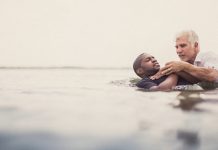




Saved in the surf
Growing up on the sunny east coast of Australia meant summers at the beach. I was no surfer dude but the crash of waves and unmistakable squeak of hot sand was often a soundtrack in my adolescence. It’s easy to romanticise the white sand beaches and crystal blue hues of Australia’s coastal waters but now, particularly as a parent, I am aware of the danger...
Three times the world nearly ended
Many doomsayers have “cried wolf” when it comes to the end of the world. Does that mean it’s not going to happen at all?

You’re gifted whether you know it or not
There’s something lying on a massive table. It’s a huge picture. You move closer and see that the design is made up of individual pieces, like a jigsaw puzzle. But the pattern is unusual. It’s not an image you recognise, such as a Swiss mountain or a bouquet of tulips. As you focus on the details, you notice the pattern is constantly moving...

Why do bad things happen to good people?
The question in the title is a protest which expresses a fair amount of suspicion towards God. It is a barely concealed condemnation of God and His actions, the strange rebellion of a world that sees itself as morally superior to God. People forget Scripture's words in the book of Job: Beware lest wrath entice you into scoffing (Job 36:18, RSV).

Returning to the blessing of the small things
Rediscovering the blessing that resides in the little things of life has been one of the challenges of every season I've lived through. This is the conclusion I always come to when I take a moment to reflect.
We are more than we can easily explain
Suppose I leave the window open then leave home. A stack of banknotes can be seen on the table through the open window. An individual walking down the street notices the opportunity, thinks for a while, but decides to move on. Why would a man who has the opportunity to steal decide not to?

Love in the Time of COVID-19
As we know all too well, life can be hard. Even in the best of times, life can be hard. But now this, a pandemic? How are we to cope?

Prodigal sons and abiding sons | How to help children stay close to God
“Children cannot live according to God’s ways if they do not know God’s Words.” This is a truth in which Christian parents can ground their efforts to help their children build their faith in God, in order to later avoid the path of prodigal sons.

Parents of prodigal sons
Few things can pierce a parent’s heart as painfully as their children’s decision to walk away from God. Pain, guilt, shame and the feeling of failure are the crushing burdens which parents of prodigal sons carry, while still wavering between hope and discouragement.

Beauty in brokenness
Amy Ainsworth is the mother of 5-year-old twin girls, whose appearance is both surprising and fascinating – how could it be any other way when you see a pair of big green eyes showing off from behind the brown curls of one of the girls, contrasting strikingly with the coffee-coloured eyes and black, straight hair of her twin sister?

Choosing happy
Paul was imprisoned by the Roman Emperor. He was on Death Row. Every morning, when he opened his eyes, he didn’t know if this day would be his last, and whether he would be thrown to the lions or burned.

“Why do others love Jesus differently than we do?”
As strange as this question may seem, it is also difficult and has consequences that are not at all negligible. Even if it is not always phrased like this, or perhaps not even spoken out loud, this question arises in every home.

Post-atheism and the relativisation of relativism
The end of the last century created the perfect context for postmodernism to exercise its veto over all the ethical dilemmas of the day. As a result, today, as in vitro fertilisation, abortion, euthanasia or homosexual marriage enter the legislative agendas of more and more countries, we see political correctness taking precedence over religious morality.

Is Christianity a cult?
Western society has a fascination with cults. The word itself conjures up imagery of a seedy leader sporting dark aviator sunglasses and captivating a group of conservatively dressed people with his every syllable. The word brings a subtext of utter devotion but also absolute brainwashing or mind control.

Why did Jesus have to die for us?
Taken as a whole, this question sounds like a painful cry, springing forth from the depths of the human being, in the midst of the darkness of uncertainty and doubt. This question, however, consists of multiple sub-questions. We will address these essential questions that will open our minds to the light of the teachings of Him who holds all knowledge and truth.