













Reasons for the cross of Christ: why was His sacrifice needed?
The name of Jesus brings to mind the gift of the incarnate Godhead—their supernatural acts, astonishing wisdom, incomparable goodness, unmitigated innocence, supreme sacrifice, offered salvation, and our only certain hope.
“God is dead”. Any objections?
The tendency toward the total privatization of religious life is particularly strong today, especially in the new generation.
A tsunami put under a microscope
In 2004, we experienced firsthand one of the most devastating tsunamis of our century. It was early morning, on Boxing Day.
Did Jesus really rise from the dead?
No serious historian doubts that Jesus lived in first century Palestine and died by crucifixion. However, controversies arise when the resurrection is discussed.
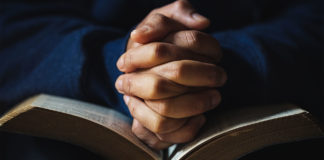
The faith that instills certainty
I had a ringing in my ears due to that unusual inner silence which I was paradoxically experiencing at the same time as a thought-storm that made me scream on the inside.
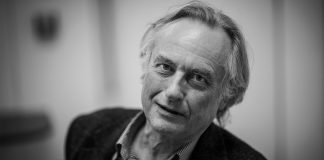
Thank God for atheists?
Richard Dawkins is arguably the world’s best-known atheist. His 2006 book The God Delusion was a runaway success and widely influential. That’s why theologian Alister McGrath was surprised when a young man told him he became a Christian after reading The God Delusion.

Fear of war: how to soothe our hearts
When the fear of war overwhelms our thoughts, let us not forget that we are not alone, that God will end our suffering and give us a new and everlasting life.
Lewis and the Lion
We have become so accustomed to authors and researchers being highly specialised in niche fields, that we are tempted to be skeptical of works they produce outside of their accepted field of expertise. It seems bizarre therefore that an author of children's literature could also be a professor at Oxford and Cambridge and an expert on the medieval era.
The conditions for courage (I)
Motto: "Fear is a reaction. Courage is a decision." (Winston Churchill)

What do we do with our guilt?
Nothing else on earth judges a person as ruthlessly as their own conscience, and truthfully, nothing else should. The painful process happens before and after the harm has been done.

Love in the Time of COVID-19
As we know all too well, life can be hard. Even in the best of times, life can be hard. But now this, a pandemic? How are we to cope?

Prodigal sons and abiding sons | How to help children stay close to God
“Children cannot live according to God’s ways if they do not know God’s Words.” This is a truth in which Christian parents can ground their efforts to help their children build their faith in God, in order to later avoid the path of prodigal sons.

The surprise of this very night
''The ground of a certain rich man yielded an abundant harvest. He thought to himself, ‘What shall I do? I have no place to store my crops.’ Then he said, ‘This is what I’ll do. I will tear down my barns and build bigger ones, and there I will store my surplus grain. And I’ll say to myself, 'You have plenty of grain...

Is faith a negative thing in life?
The effect or influence that a particular thing has on us depends largely on where that thing falls on the scale of our values. It's one thing to lose your folding fan in a foreign country and quite another to lose your passport.

Injustice and God: Is He the wrongdoer or the one wronged?
The concept of reward is one that encapsulates a world of joys, satisfactions, pleasant emotions, and accomplishments. It is usually correlated with what we do, what we say, who we are, and so on. We could say that it is an expression of our value in relation to the world. But any reward can be overshadowed by painful feelings when there is a...