












Before drawing a conclusion
From my experience and the conversations I have had so far, I have found that there are two major categories of people who come to doubt the existence of God.

“And forgive us our trespasses…” But what if they persist?
In our Christian experience, we strive for perfection, but we honestly admit we are a universe away from it. Our inability to live up to God’s standards can lead us to feel we can no longer benefit from divine forgiveness, at least not until we prove strong enough not to give into the sins we are battling.


So you’re church-shopping…
Have you ever seen the early morning worship programs on television? The packed congregations, the huge church venues, the smooth-talking evangelist who delivers the perfect sermon . . . Church seems to be where the action is. That there are so many new mega-churches popping up all over the world suggests that a lot of people are desperate for spiritual guidance and fellowship....

The lost faith
Faith is a commonly used concept, but it is rarely understood in its rich semantics and philosophical implications. Christian faith rises above being defined by lists of doctrines, beliefs, moral principles, commandments, and liturgical rituals in the communicator's mind for its nature and content to be faithfully represented.
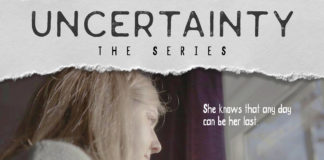
“Uncertainty: the series.” First episode of the international documentary online today
Live every day like it is your our last! Many use these phrase as a prop for their riskiest decision, or simply to justify a recklessly extravagant lifestyle. But what would our lives look like if we were to really live each day fully aware that it might be our last?

Does God listen to my prayers?
If there is a crossroads where both the path of faith and the path of doubt or unbelief begin, it is prayer.

Practising faith
When I was at high school, I played basketball a lot—most days at school, then team training sessions and often two or three games each week. At university, I played on the best team I have been part of. We trained and competed regularly over two years, and twice won our league championship.

I am not a sinner
I grew up in a small town called Utsunomiya, three hours away from Tokyo. When I was a child, I was certain that there was a God and that He loved me. Then I grew up and began to wonder, “If there is a good God, why is there so much suffering in the world? Why do innocent children die? Why is the...

God is love and that makes us eligible, as imperfect as we may be
We have trouble understanding and accepting the image of a loving God, as we have grown too familiar with the type of love that offers itself only when it finds in a person the qualities that make them easy to love.

Broken dreams: The lessons we learn through failure
We often say God is good, especially when, after threatening to go dangerously off track, life resumes its regular course. But what is left to say when all that remains of our dearest dreams is a handful of shards that can no longer be glued together?

Love and cosmic cold
"We keep on being told that religion, whatever its imperfections, at least instills morality. On every side, there is conclusive evidence that the contrary is the case and that faith causes people to be more mean, more selfish, and perhaps above all, more stupid." (Christopher Hitchens)

How authentic is my life?
When one pays attention to the finer details, any life story can be interesting. When you go into detail, any common or mediocre story that could have been summed up in only a few words, becomes a confession. I realise that my own story is no exception, although it has often seemed to me that I live a banal and predictable life.

Don’t say I haven’t told you so…
During my adolescence, a Swiss author, Erich von Daniken, made waves with his theories about extra-terrestrial influences on early mankind. His most important book was called Memories of the Future. Of course, his ideas have no support today, but the idiom remains: memories of the future. Something from the past says something about what is to come.

My stellar moments
It is said that God works through people. I am convinced that the people evoked in connection with my stellar moments—and I really would have liked to name them all—each contributed, in their own way, to my reunion with Divinity.