











The angry Christian: How can we free ourselves from destructive anger?
A man is about as big as the things that make him angry – Winston Churchill

In the footsteps of the historical Jesus: benefits and perils
Christianity is either historical or not. It claims that “God acted decisively in history, revealing Himself in external, specific events attested in the Scriptures of the Old and New Testaments.”[1] The most important of these events was the coming of Jesus as the Messiah, the saving Christ.

The lens you see me through
Ask any cinematographer what gets them excited, and I guarantee there’s a fair chance they’ll answer with “lenses”. Having spent many years studying film and many more practising it, I can safely say that I now understand why this is—and it’s probably the first response you’d hear from me if you asked me the same question.

How does God answer prayers?
“I will stand at my watch and station myself on the ramparts; I will look to see what he will say to me” (Habakkuk 2:1).
The marks of (un)belief
I believe that doubt is a part of faith, not its opposite. It took me quite a few years to say this without feeling guilty. I needed to have many experiences before I could accept that questions are legitimate and not a sign of spiritual decay.

A slice of heaven
Several years ago, I had the opportunity to tour south Te Waipounamu (the South Island of Aotearoa New Zealand). Flying first into Invercargill, I made my way north, excitedly anticipating iconic tourist spots such as Queenstown, Milford Sound, Wanaka and more. However, on the way, the sleepy town of Te Anau caught me by surprise, captivating me in a way that I didn’t...

Marathon ended
I doubt there’s a person who hasn’t heard of the Boston Marathon bombing, which took the lives of three people. As runners entered the home straight, with the finish line in sight, first one then another explosion ripped through the happy, watching throng.

The great astonishment
I was talking to the man I call Professor and I asked him, "I know you had reservations about getting baptised. Why did you decide to do it anyway? What was the deciding factor?"
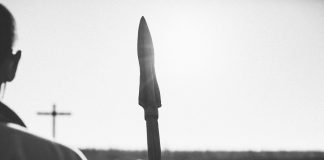
Salvation from the end of the spear
Their common dream was to take the Gospel to the far reaches of the earth. In the early 1950s, young men Jim Elliot, Pete Fleming, Ed McCully, Nate Saint, and Roger Youderian were with their families in South America, working in Christian missions. The future was to bring them together in an extremely dangerous dream.

The one way road cancelled
I was there, I saw him. He was coming towards me mechanically, impassively, coldly. He suddenly stopped in front of me and waited for me to speak. For a moment, I froze. He was tall, thin, his face oval and his eyes blue, slightly sunken under his eyelids. I had met such people before, but there was something special about him.

Celebrating transformative faith
I don’t remember ever doubting that, beyond the limits of the ensnaring, visible world, there is another reality that can only be accessed by those who speak the language of faith.


The greatness of an ordinary life
From an early age, we are bombarded with messages telling us to stand out, to make something of ourselves, to do something great with our lives. Many times the voices are religious in nature: God has great plans for us, He will do truly remarkable things with our lives.

Understanding suffering better
"And we know that in all things God works for the good of those who love Him" (Romans 8:28).

Self-help and spiritual paralysis
Why personalising Christianity could threaten your salvation.