












Today’s world and the unholy holy wars
"I'm driven with a mission from God." God would tell me, 'George, go and fight those terrorists in Afghanistan.' And I did, and then God would tell me, 'George, go and end the tyranny in Iraq.' And I did..."
Forgiveness heals the one who forgives
Everyone thinks forgiveness is a lovely idea until he has something to forgive. – C.S. Lewis
On the side of God and logic
Benjamin Solomon Carson is the famous American neurosurgeon who was the first to successfully separate conjoined twins in 1987.
R(el)ational faith
In the maximalist search for evidence that can justify our belief and, at the same time, help us defend our reputation, something is lost: the very concept of faith.

Thanksgiving and praise, ingredients of the prayer that changes us
The imbalance between the requests and the thanksgiving we bring into our worship is a topic any Christian can talk about, and not just based on other people’s experience. As long as we approach praise and thanksgiving as duties to be fulfilled, we will miss the greatest blessings that can rest upon a heart full of gratitude.

The solution to addiction doesn’t come from within
How should addictions be understood? Addiction is usually regarded as a failure of the will, or as a sickness. Lately, the tendency is for the younger, educated generation to embrace the second answer. The idea that addiction is a failure of the will, a sin, from a Christian perspective, is seen as outdated.
The risen Jesus
Was the death of Jesus the end of an extraordinary life, or just the beginning of eternal life for those who believe in Him?
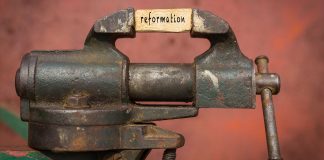
How (not) to clip the wings of reformation
In the fourteenth and fifteenth centuries, Europe was hit hard by several disasters, the proportions of which are difficult to imagine today.
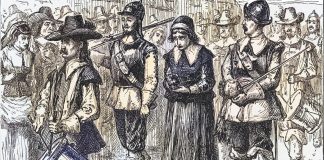
Mary Dyer
That fateful day of June 1st, 1660, was not the first time Mary Dyer wound up at the gallows. The previous time, with her hands tied and her face covered by the handkerchief of her former pastor, Reverend John Wilson, she had escaped death by the skin of her teeth, after a death sentence that had already killed two of her dear friends...

The question that rattles even the faith of clergymen
"Where is God?" is the question that arises in the face of inexplicable tragedy. When even a high-ranking clergyman is plagued by this question, the natural response is to conclude that something does not add up.

Is everything God does for our absolute good?
In a world dominated by artificiality and instant gratification, we are becoming masters at controlling our circumstances and environment.

Is faith a negative thing in life?
The effect or influence that a particular thing has on us depends largely on where that thing falls on the scale of our values. It's one thing to lose your folding fan in a foreign country and quite another to lose your passport.

Uncertain certainties and the fragility of reason
“For a long time I supposed that somewhere in the university, there were really clever people whom I had not yet met, and whom I should at once recognise as my intellectual superiors, but during my second year, I discovered that I already knew all the cleverest people in the university. This was a disappointment to me, but at the same time gave...
In the same boat as the murderer
Decade after decade, Darold and Barbara Bigger have built their lives with honor, discipline, and devotion.