













The One Who emptied Himself
Some moments in life fade quickly, like ephemeral portraits in the memory's archive. Others, though we have never witnessed them, haunt us and force us to reconsider our perception of life, time, and our shadow self.

Faith, not illusions | An interview with Rusty Williams
American pastor Rusty Williams has an amazing life story to tell, as well as a story about developing his faith. The occasion was his long-term effort to build a church—a vision that took 14 years to accomplish! While preparing the written version of this interview, I attended the first worship service in the completed church, just as HopeTV was broadcasting the programme.

COVID-19: The third signal
I thought to myself: Is there an alarm or is it an end of day signal?

Injustice and God: Is He the wrongdoer or the one wronged?
The concept of reward is one that encapsulates a world of joys, satisfactions, pleasant emotions, and accomplishments. It is usually correlated with what we do, what we say, who we are, and so on. We could say that it is an expression of our value in relation to the world. But any reward can be overshadowed by painful feelings when there is a...
The Jesus that defies definition
You have heard that it was said, ‘Eye for eye, and tooth for tooth.’ But I tell you, do not resist an evil person. If anyone slaps you on the right cheek, turn to them the other cheek also” (Matthew 5:38,39).

The embrace of heaven
My body felt like it was on fire, as if someone had pierced my skin with thousands of burning needles, and I could barely breathe. Fear had crept into my life some time ago, following me like a shadow that drained my soul and stole my precious moments of peace.

Five reasons why I have faith in God
Faith has brought me not only a sense of God's presence, but also evidence that He is answering our requests. Therefore, the other reasons that made me believe have become stronger.
Foreshadows that illuminate | How Christ was known before the incarnation
The Passion and Resurrection of Jesus Christ—or the Christian Easter—stand out distinctly in the crowded landscape of global religious beliefs and ideas. No other religious tradition contains the concept of a divine person offering Himself as the unique and sufficient mediator through whom God draws near to humanity, and humanity draws near to God.

Christ in them
I notice people, and passionately collect their stories. My favourite stories include those small cracks that allow one to peek inside another soul, those moments when their voice is almost imperceptibly altered, the eyes light up for a reason I do not know, and their gestures are unexpected.

Final Judgement: The day the critics will be silent
Claiming justice is history’s refrain, and it has a significant echo in the Bible. We all dream of a happy ending and a fair judgement as soon as possible. Heaven itself is surprised that God has delayed His holy justice. While some wait for it, others quash even the very thought that it might come.

How many Bibles does one person need?
“We need a Bible like this,” said Reverend Richard Cizik, Vice President of the National Association of Evangelicals in America, at the launch of the first Green Bible in 2010. Current environmental issues demand an ecological Bible, where passages about the quality of divine creation and care for nature entrusted to us by God are highlighted in green, Cizik says.
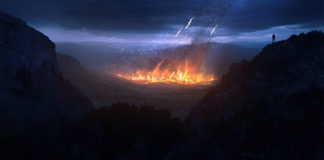
The end of the world according to Christianity
The idea of the end of the world refers to the end of the social order and humanity; the end of the planet as we know it. But according to the Bible, these will not all come at once.

When sounds proclaim the glory of God
The year 1685 gave the world two of its greatest composers: Johann Sebastian Bach and George Friedrich Handel. The presence of the great biblical subjects in their masterpieces not only filled the hearts of believers with joy, but determined a new direction in the evolution of the musical language, which continues to have an impact to this day.
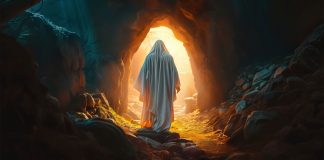
The risen Jesus
Was the death of Jesus the end of an extraordinary life, or just the beginning of eternal life for those who believe in Him?