











What can we learn from children facing death?
In two editions of our show, we talked to Johnnathan Ward about his long career as a chaplain. Given his many years as a military chaplain, we touched on difficult topics such as: Does the presence of a Christian chaplain in the military mean that God approves of military operations? How does a military chaplain serve in a conflict situation?
Three times the world nearly ended
Many doomsayers have “cried wolf” when it comes to the end of the world. Does that mean it’s not going to happen at all?

My journey to Bethlehem
They say that "all roads lead to Rome". This famous saying originated in ancient times with the extensive network of roads built by the Romans to facilitate communication and travel throughout their empire.
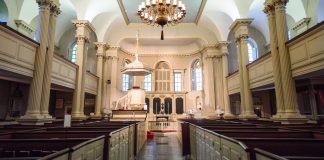
The Unitarian Movement | How an unorthodox minority contributed to the development of the Reformation
The Unitarian Movement was defined as a significant minority movement under the influence of Humanism. The name “Unitarians” comes from the belief in one divine Person, a belief also common to Judaism and Islam, as opposed to the doctrine of the Trinity.

The miracle of my resurrection
By the year 2022, I had not lost anyone close to me, but I had the feeling, as never before, that death was approaching with unexpected speed. The war that was taking place to the east of Romania, and the news that we were in second place in the world in terms of the number of deaths per thousand inhabitants, made me think...

The mystery of the seventh day (I)—the earth bears witness
The Grace Community, an American Evangelical church, publishes on its website a large number of e-books, including some religious, apologetic ones, such as Open Letters to an Adventist by Michael Morrison and Joseph W. Tkach, an old and ongoing dispute on the subject of the day of rest[1].

Deal with the devil
Among the many perplexing phenomena the internet offers, recent public statements by certain American artists stand out. These individuals, popular in various circles, openly admit to having made a deal with the devil—selling their souls and becoming his servants in exchange for career success, wealth, and fame.


Searching for glow-worms
With packs and tents strapped to our backs, it took our little group of three several hours to reach the hidden valley. The lush, green rainforest was cool and damp and as we gingerly clambered over moss-covered boulders, we attempted to follow an almost non-existent track that wound its way parallel to the mountain stream.

So you’re church-shopping…
Have you ever seen the early morning worship programs on television? The packed congregations, the huge church venues, the smooth-talking evangelist who delivers the perfect sermon . . . Church seems to be where the action is. That there are so many new mega-churches popping up all over the world suggests that a lot of people are desperate for spiritual guidance and fellowship....

Jim Ayer | Forever a fisherman
Jim Ayer was, for most of his life, a slave to his own dreams—a fisherman of thrills and addictions. From when he was a child, he attached a ball and chain to each ankle, closed himself up in his own world, and threw away the key.
COVID-19: The pandemic that transforms us into different people
In Europe, one in twenty people suffer from depression, and one in four will experience depression during their lifetime. In the United States, major depressive disorder affects about five percent of the population.

Becoming the father of the Son of God
In the history of salvation, few people have received a more unsettling calling than Joseph of Nazareth. After overcoming his initial hesitation, he made a series of decisions born of obedience. He remains a model of mature faith and authentic manhood.

Free to follow Jesus
Choir rehearsal had begun only five minutes earlier, but I was already restless. Using a convenient excuse, I slipped out quietly, thinking about the crooked piece of rebar I had hidden a week before. It was exactly what I needed to force open the lock on the door without a handle, deliberately left that way so no one could enter the construction site...