














Love does not give up
We love people for who they are. But there is a kind of love that is too high for us to truly comprehend in all its nuances, a love that manifests itself towards people no matter who they are or what they become. We find a love such as this in the beautiful story of Ian and Larissa.

What did I miss about God in my 20s?
I was twenty when I first became curious about God. I was fortunate to see His presence in the lives of my friends and longed for that same presence in my own life.

Don’t say I haven’t told you so…
During my adolescence, a Swiss author, Erich von Daniken, made waves with his theories about extra-terrestrial influences on early mankind. His most important book was called Memories of the Future. Of course, his ideas have no support today, but the idiom remains: memories of the future. Something from the past says something about what is to come.
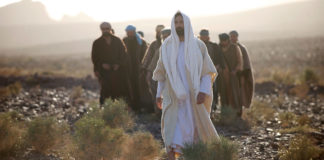
Jesus: The Word and His words
Jesus' principles can still shape a sincere discourse even though many centuries have passed since the moment they were displayed in His life.

“Eternity In Their Hearts” | Book review
Born in Canada, in 1935, Don Richardson was a missionary who fervently carried on the Renaissance spirit of the great missionaries. Having studied at the Prairie Bible Institute and the (Wycliffe) Summer Institute of Linguistics, together with his wife, he worked as a missionary among the Sawi of Papua New Guinea for 15 years, and translated the Bible into their language. His books,...

Patience and resilience
When I think of patience and resilience, many inspiring life stories and names come to mind. Among them, one shines with particular intensity: Anne Frank.

Faith that survives unanswered prayers
The greatest tragedy of life is not unanswered prayer, but unoffered prayer. – F. B. Meyer

An unexpected return, the premise for missing the meeting with Christ
How important is the second coming of Jesus Christ in traditional Christianity?

What is stewardship?
The smell of burning food filled my tiny kitchen. “What's that smell?” I asked a friend who was sharing my house for the week. Every young man knows the smell, familiar from an early age—your first acquaintance comes from burnt toast and camping trips where, after burning everything you tried to cook, you end up eating your baked beans straight from the can.

Dr Carlton Byrd and the Church in work clothes
Dr Carlton Byrd is the director and main speaker of Breath of Life, a television broadcast dedicated to the urban colored population in the U.S. and the Pastor of the Oakwood University Church.

Final Judgement: The day the critics will be silent
Claiming justice is history’s refrain, and it has a significant echo in the Bible. We all dream of a happy ending and a fair judgement as soon as possible. Heaven itself is surprised that God has delayed His holy justice. While some wait for it, others quash even the very thought that it might come.

A year of waiting
For me, 2022 was the year of waiting—a word that managed to define our lives, thoughts and actions to an unexpected degree.

“Why do others love Jesus differently than we do?”
As strange as this question may seem, it is also difficult and has consequences that are not at all negligible. Even if it is not always phrased like this, or perhaps not even spoken out loud, this question arises in every home.
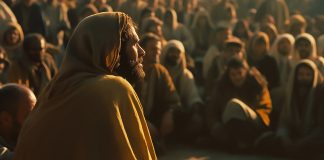
Jesus also loved…
"History shows how surpassingly difficult it is for Christians not to forget Christ," says Professor Chris Green. Forgetting does not mean losing sight of His existence, but rather losing sight of His way of being, His values, and His way of relating to those around Him.

COVID-19: A world beyond all human tragedies
Should we be optimistic or pessimistic about our future? This is a question even specialists are concerned with, and it cannot be answered easily. It is difficult to predict what the future holds.