













Resilience: An invisible shield in the face of our problems
When strangers give you a helping hand after your friends have forgotten about you, the world suddenly seems a little more beautiful. This was the experience of PJ Robins when a crowd of strangers suddenly arrived at the party for his autistic little girl, which no one else had wanted to attend.

No one deserves to have that much money
In a dilapidated shack in Nairobi, a young woman makes her confession to the BBC reporter eager to hear her story: “I don’t know why God allows some people to be poor while others are rich.”
Codependency: a concept too widely used to have a single definition
A word is dead when it is said, some say. I say it just begins to live that day. – Emily Dickinson

Parenting lessons from imperfect parents
A few years ago, I had the pleasure of meeting a young woman who was good at everything. Although she was only in her early twenties, she was an expert in the kitchen, passionate about cleaning, attentive to the needs of children, had a green thumb, was skilled at raising animals and was able to give an articulate speech in her field of...

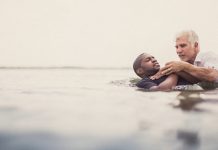
The last man in the water
Self-sacrifice—the ability of some people to put the lives of others above their own—is not at all easy to understand.

What love looks like
For anyone who has spent any time in a church context or has encountered some form of Christianity, the significance of the story of Jesus is often assumed and then summarised in the single best-known Bible verse: “For this is how God loved the world: He gave his one and only Son, so that everyone who believes in him will not perish but...

“If the paper screen is closed, it means I’ve died”
When a closed window shade becomes an SOS sent by those used to living on their own but afraid of dying alone, something has fundamentally changed in a society that not long ago valued human relationships.

How parenting has turned into a strategy game
One of the most striking changes in contemporary parenting is the way it is starting to resemble a well-designed video game, which can make players become addicted. But what happens to parents who feel they are losing the game?

Never enough likes
The American Economic Review recently published the results of the largest randomized study ever conducted to measure the impact on the quality of life that deactivation ones Facebook account might have.

How children are affected by the loss of a parent
It is difficult to say whether there is a preferable age for facing the death of a parent, but having it happen during childhood and adolescence can have devastating effects on physical and mental wellbeing, which can extend even into adulthood.

Do your best
“Finally, brothers and sisters, whatever is true, whatever is noble, whatever is right, whatever is pure, whatever is lovely, whatever is admirable—if anything is excellent or praiseworthy—think about such things. (…) I can do all this through him who gives me strength” (Philippians 4:8, 13).

Caught between the hands of a clock
Since Hans Selye introduced the concept of stress into the language of science almost seven decades ago, it has now become firmly rooted in our vocabulary and permeates all levels of everyday life. One common cause of stress, though unevenly distributed among us mortals, weaves enough threads into its intricate fabric that it cannot be entirely avoided: the relationship with time.

Friends and social networks
"I'm 14 years old — and I'm sick and tired of social media." (Riley Jackson)

Who is educating your child?
Education is essential for the survival of any social group, since a community ensures its existence and development only by passing on to the next generation the knowledge it has accumulated, the power it derives from it and its ideological aspirations.

The only death that can be avoided
"If there is anything more heartbreaking than a body perishing for lack of bread, it is a soul which is dying from hunger for the light." (Victor Hugo)