




Revelations from the morning pages
I am 33 years old, married and have a two-year-old daughter. It is great to be a mother and see how beautifully we were created. I was fascinated by pregnancy, I am still interested in the subject of natural births and I try to research as thoroughly as possible each stage we are going through.

How I discovered my questions while searching for answers
Five seconds. And everything smells of heaven, wet grass and happiness.
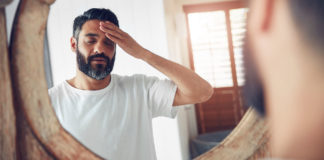
Should I ever regret anything?
Two popular songs in the second half of the twentieth century have influenced entire generations, to this day, with a message we can call at least provocative: "Non, Je ne regrette rien" ("I do not regret anything"),[1] crooned to us by Edith Piaf, and "My Way", Frank Sinatra's melodic boast.[2]

Are Christians better equipped to make decisions?
"All your life long you are slowly turning this central thing into a heavenly creature or a hellish creature" through the decisions you make, wrote CS Lewis. If the choices we make really have such an impact, how can Christians make sure they make the right decisions?

Love, from dawn to dusk
Love stories have a way of creeping into the foreground and convincing us that their effervescent debut is just the overture to a marriage that will always rekindle, in a different intensity, the same fireworks of beginnings.

Confession: in search of the ultimate goal
It is important to have a purpose in life, yet this is not enough. It really matters what your purpose is.

Hope, a legacy of another world
Hope can be palpable and elusive at the same time, both reasonable and independent of logic. Yet this independence from logic is not synonymous with indifference to reason, but a victory over it. Hope has its own logic, one that changes lives for the better.
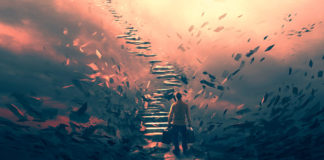
Resilience: An invisible shield in the face of our problems
When strangers give you a helping hand after your friends have forgotten about you, the world suddenly seems a little more beautiful. This was the experience of PJ Robins when a crowd of strangers suddenly arrived at the party for his autistic little girl, which no one else had wanted to attend.

The price is right: “For who makes you different from anyone else?” (part 1)
These days, we are free to believe anything and to be anything, at least in theory. However, if we gave history a closer look, we would realise that it is not beneficial for us to believe or be just anything. We agree with the biblical exhortation, often distorted by popular lore: "...test them all; hold on to what is good" (1 Thessalonians 5:21).
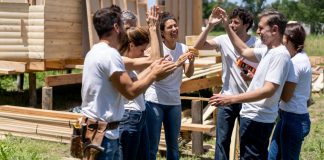
Courage in the deluge
After a chance meeting of mutual friends, I was introduced to Tim and Sonia in a restaurant in central Toowoomba, Queensland, eight days before their home was washed away.
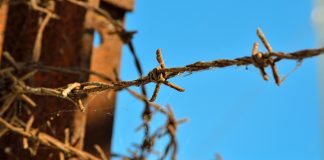
The courage that makes us human
Courage is a special virtue: unlike other virtues that can be formed and polished over time, courage only makes itself known spontaneously and fully in situations where one is required to act, proving its existence.

Journal entry
I remember precisely the moment and the place where I realized that I was free to choose what kind of person I want to be. However, this construction requires courage, suitable materials and the perseverance of not leaving the project in ruins when there are deviations from the plan.
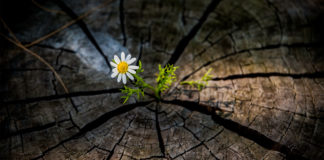
My mechanism of resilience
When I was four years old, my younger brother was born. My parents focused on my brother and spent less time with me. It was only 40 years later that I discovered how this had affected me.
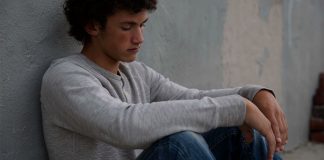
Resilience to shame
Where there's fear, there's shame, says a Romanian proverb. What the proverb doesn't say (and what many of us don't know) is that the folds of shame hide a multitude of emotional problems and dysfunctional relationships that are passed down from one generation to the next.
Fragments of light in the dark
When it was close, when I first saw its truly hideous face, I realised that I would never get used to it. And, no matter how hard I tried, no matter how much hope I tried to gather, I found nothing bright or inspiring about death. I know I will never find such a brightness, because it doesn't exist. But I saw the...