














Vaccine against death
What would you do if someone denigrated you in public? You could deny the information, but there is no guarantee that you will be able to rehabilitate your image. If you leave things as they are, there is a risk that silence will be interpreted as guilt. If you go to court, the process might take a long time and it may not...

Stones speak to those willing to listen
On May 23, 2012, the Israel Antiquities Authority announced the discovery of a 1.5 cm piece of clay, which represents the oldest extra-biblical attestation of the town of Bethlehem. Eli Shukron, the coordinator of the excavation work, believes that we are dealing with a bulla from the 7th-8th centuries B.C., probably used for sealing a document or object.

“Having a child solves all a couple’s problems.” True or false?
"Once upon a time, there was a princess as beautiful and kind as a fairy. She was an only child and her parents loved her dearly and did everything for her. When she grew up, they gave her a magnificent wedding to the brave man she had chosen, a handsome and virtuous fellow. After a while, misfortune struck: not a day would pass...

From rancour to forgiveness: How do Christians manage conflict?
A lack of conflict is not necessarily a sign of spiritual maturity, as some Christians might be tempted to believe. The way in which we manage conflict says a lot about how we understand the role of grace, forgiveness and reconciliation in a sinful world.
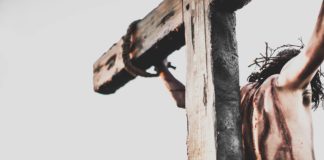
The opposite of love is not hatred (part 1)
For centuries, the sacrifice of God the Son and the divine plan for man’s salvation have generated several dilemmas and raised more questions than we could imagine. And the answers that have been found have revealed more implications of the cross than we used to believe, whether we are Christians or non-Christians, believers or skeptics.

Jesus is the argument
Celsus was concerned about the spread of the new sect called Christianity. He felt that Christianity's view of the world and of life was so different from the ancient world order that, if accepted by the majority, it would ruin society.

Are we smarter than previous generations, or do we simply think differently?
Researcher James Flynn of the University of Otago identified a surprising phenomenon: “We get far more questions right on I.Q. tests than each succeeding generation. (...) Indeed, if you score the people a century ago against modern norms, they would have an average I.Q. of 70. If you score us against their norms, we would have an average I.Q. of 130. Now this...

Love does not give up
We love people for who they are. But there is a kind of love that is too high for us to truly comprehend in all its nuances, a love that manifests itself towards people no matter who they are or what they become. We find a love such as this in the beautiful story of Ian and Larissa.

A day on the golf course and the unexpected effects of trauma
Douglas Jacobs has a long pastoral and academic career, as well as many hobbies and interests. An accidental witness to an armed incident that changed his perspective on life and death, he shares his surprising experiences and lessons learned.

God and the onion test
Humans have only a fifth of the genetic material of an onion, and slightly more DNA than a mouse. Why would the Creator of life use five times more genetic information for an onion than for a human? And why would He create humans to be only slightly more genetically complex than mice? Aren't long and aimless evolutionary processes a better explanation for...

Taste and health in moderation
Salt is essential for bodily functions, but it should be consumed in moderation.

The courage of freedom
“It was as if I were living in a fairy tale. And the most wonderful part was that I knew—hard as it may be to believe—that the story was true. None of the hardships of imprisonment touched me. The fear of the unknown no longer unsettled me, nor did the fact that, three days after my arrest, no one had yet called me...

Looking for a loving father
Fathers are an important part of their children’s lives. Good dads can provide stability, protection and love in a child’s life.

Faith that survives unanswered prayers
The greatest tragedy of life is not unanswered prayer, but unoffered prayer. – F. B. Meyer

COVID-19: The new mirror in which we look at our parents
How can we encourage the elderly during this time? How can we help them understand that we don't want to lose them and that, although it's hard for them, we didn't abandon them. I have an elderly mother and, honestly, it would help me a lot. Can you write for me?