











In a complicated relationship with work
Even if our "relationship with work" is often a complicated one, about which we do not always have the best feelings, we should remember that our jobs are more than just sources of income.
Difficult conversations | How do we talk about death with our children?
Talking to your children about death can be an act of love. You can't take away their pain with a simple conversation, but you can give them something just as important: truth wrapped in gentleness, the reassurance and relief that they are not alone in their grief, and even the hope that sees beyond the loss.

How do I know if I’m infected with the new coronavirus or I have a cold / flu?
More and more people who are experiencing the typical symptoms of a cold and flu are asking the question in the title. This article provides essential information that can help us recognize the danger of infection with the new coronavirus.
COVID-19: The pandemic that transforms us into different people
In Europe, one in twenty people suffer from depression, and one in four will experience depression during their lifetime. In the United States, major depressive disorder affects about five percent of the population.

Pocket apocalypse: The end of the world in the press
The image of an apocalypse generated by a microscopic coronavirus has been sketched more than once by the press in the past few weeks.

How to deal with the loss of a loved one
The loss of a loved one unbalances us; we are never ready for it. Here are a few recommendations given by psychologists for such a situation.

Never enough money? A road to financial independence
The memory of having spent all the money in my account and still having a week to go until my next salary is painfully vivid to me, even though it has been quite a few years since that was my month-to-month reality.
Norma Nashed | Poverty made her a mother to thousands of children
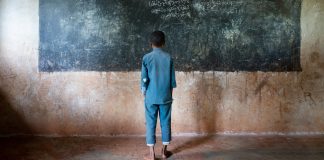
Norma Nashed has been running the Restore a Child organisation for more than two decades, helping 4,000 children in ten African countries.
How much do the origins of our errors in judgement matter?
An article in the New Yorker[1] explains why we tend to not change our convictions, not even when faced with contrary evidence.

Son of God
Even in this secular age, the world’s largest group of religious believers—a full third of Earth’s human population—worships Jesus of Nazareth as the eternal God who appeared in human flesh. Millions more—Muslims, Baha’i, Hindus, Buddhists and others—recognise His unique connection to the Divine, His wisdom and His compassion.

Understanding suffering better
"And we know that in all things God works for the good of those who love Him" (Romans 8:28).
Are science and religion compatible?
In recent weeks, the results of a Fermilab scientific experiment have caused quite a stir in the scientific community. The experiment, which dealt with some of the fundamental particles of the universe, has the potential to change humanity’s understanding of modern science. As a result, it is also raising questions about what science is, and if it can be wrong.
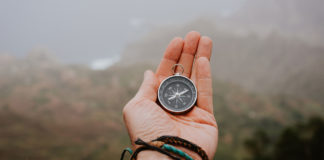
How authentic is my life?
When one pays attention to the finer details, any life story can be interesting. When you go into detail, any common or mediocre story that could have been summed up in only a few words, becomes a confession. I realise that my own story is no exception, although it has often seemed to me that I live a banal and predictable life.

The letter that did not get lost
Denisa Selagea has lost many things so far, from keys and phones to patience and opportunities. She has also lost sight of many words that needed to be said. So, this time, she thought she would stitch them onto paper before they got lost, to be read before it’s too late.
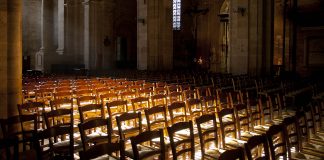
The upside of religion getting marginalised
An administrative decision by a Catholic university in the United States is a good illustration of a major reason why Christian churches, with some exceptions, are rapidly losing their relevance in society.