




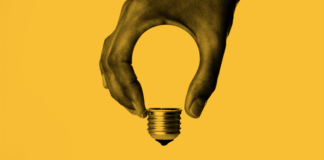
How to develop your creativity every day
Even if half of us refer to creativity as a rare trait that only the other half has, in reality, creativity is much like a muscle: the more we use it, the more creative we become.
The stranger in your home
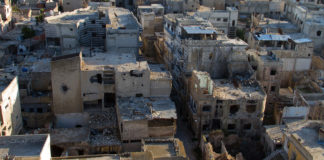
You must run. You only have a few days, perhaps only minutes, to pack all the things you can take with you. You don’t know whether you’ll arrive at a safer place, or whether anyone will welcome you, or whether you’ll ever return home.

I am what you have taught me to be
The perspectives we acquire as children about ourselves as individuals, about the world, and even about God, become beliefs that filter and guide the choices we make as adults. Some of these beliefs are helpful. Others are not. In fact, many of the obstacles we encounter in adult life are caused by these filters.

The slalom between regrets and wrong estimates
In October 2012, Forbes magazine published a list of the top 25 biggest regrets people have. According to the magazine, the most significant regrets are those concerning relationships with family members and friends, regrets concerning oneself, and career regrets.

Parents of prodigal sons
Few things can pierce a parent’s heart as painfully as their children’s decision to walk away from God. Pain, guilt, shame and the feeling of failure are the crushing burdens which parents of prodigal sons carry, while still wavering between hope and discouragement.
From hostages to fear tamers
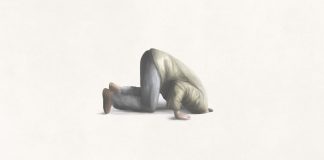
“Am I still human if I’m afraid?” The question asked by a well-known fictional character can be the starting point for reflecting on how we learn to live with our fears.

COVID-19: Should we care about the environment in the midst of an economic crisis?
Our planet may be fittingly compared to the 1994 film, Speed: A bomb is planted on a bus and rigged to explode when the bus slows to less than 80 kilometres per hour. The bus barrels through Los Angeles, hitting obstacles and endangering the lives of passengers and pedestrians until a solution is found.
Why much of what we know about ourselves is false
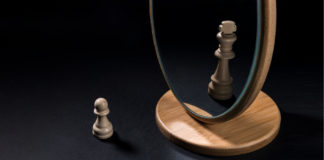
Two groups of participants in an experiment received a set of eight questions similar to those found in IQ tests.[1] One of the groups was provided with the correct answers, which they could use to calculate their final score. Thus, for them, the conditions for cheating were favourable, and the test results showed that the members of this group obtained, on average, a...
Reacting to the worst news
In a conversation with Dr. Shelly-Ann Bowen, we discussed her research on what determines whether someone will be active or passive in the face of catastrophic events—fires, floods, or a cancer diagnosis. Social injustice, a lack of self-awareness, and even an immature understanding of faith paralyse action. But there are ways to make positive changes.
People who face tragedies with eyes wide open
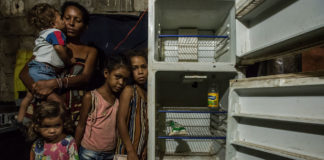
When faced with great tragedies, the most overwhelming feeling is one of helplessness. What can we do to change the lives of the hurting for the better? How can we help when not even the strong can find solutions? The answer is not simple, but it is more accessible than we might believe if it includes empathy, courage, and the faith that any...

“Teach us to pray!”
Many people know the Lord’s Prayer, having learned it from a parent or grandparent. But few know that it was given as a response to the disciples’ request for Jesus to teach them how to pray.
“God is dead”. Any objections?
The tendency toward the total privatization of religious life is particularly strong today, especially in the new generation.

How much are we worth as human beings?
Each day we are confronted with situations that make us wonder how human life can have such a low value in the eyes of some of our contemporaries—those contemporaries who live in freedom and (at least feigned) democracy, who are educated and socialised in the same civilisation as ours, often even in the same community or under similar civil laws and with broadly...
The lost faith
Faith is a commonly used concept, but it is rarely understood in its rich semantics and philosophical implications. Christian faith rises above being defined by lists of doctrines, beliefs, moral principles, commandments, and liturgical rituals in the communicator's mind for its nature and content to be faithfully represented.
The courage that makes us human
Courage is a special virtue: unlike other virtues that can be formed and polished over time, courage only makes itself known spontaneously and fully in situations where one is required to act, proving its existence.