





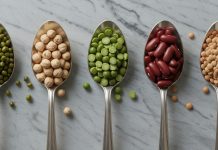








The Christian pursuit of happiness
Humanity has not only reimagined God but has also redefined its expectations. Among Christians, many believe happiness is a promise made by God Himself. But what if this pursuit is nothing more than a chase after illusions?

James Madison: The father of modern religious freedom
Influenced by the Calvinist Presbyterian John Witherspoon, James Madison, an Anglican, collaborated with Virginia's persecuted Baptists to establish the concept of religious freedom and freedom of conscience that changed America and the world forever.

The fall of communism
“Communism is the only serious rival to Christianity.” — Martin Luther King Jr.
Communist prisons were filled with Christians of every denomination, from lay believers...

Escaping from a radical family: Tara Westover’s story
When she saw her brother suffocate from the pain of a work accident and her father still insist on treating him at home with herbs, Tara Westover understood, even though she was only a child, that her parents were making a mistake with incalculable consequences.

Why we cannot escape the vicious circle of moral failure
Judging by the headlines in the press over the last weeks, the world seems ready to have a discussion about sin.

Relics: The miracle of faith or its illusion?
October 13, 1247. In the Westminster Cathedral in London, the crowd was eagerly awaiting the revelation of a great mystery.

From heartache to hopeful
It’s not hard to misinterpret the Bible. I’ve done it, most people I know have done it and if you’ve read it enough, I’d bet you’ve done it too. It isn’t surprising then, that throughout history many have misinterpreted the Bible, especially when it comes to complex ideas like the end of the world and Jesus’ second coming.

Joy is the face of Jesus
I still remember the shock I felt when I first watched "The Gospel According to Matthew," starring Bruce Marchiano. It was not the first film about the life of Jesus that I had seen, but it was entirely different from anything I had known before.

Case study in a medical journal: gastroparesis healed through prayer
The relationship between religion and science is complicated, and occasional controversies over healing through prayer have not helped. The tragedy of stories in which refusing medical treatment in favour of prayer ends in death is often exploited in the press to portray religion as rudimentary and backward. That is why it is all the more interesting that a case study attesting to the...

The conversion following conversion
This article tells the story of John Newton, the slave trader turned priest, who composed the most famous Christian hymn of all time: Amazing Grace

Our daily E-numbers: an epidemic of suspicion (Part II)
The first part of this discussion essentially highlighted that, despite the alarming and catastrophic claims surrounding E-numbers, these substances are generally far less harmful than many believe. In the following section, we will examine some of the most criticised and controversial E-numbers in Romanian public discourse. Let’s begin with the one often described as “the most TOXIC/CARCINOGENIC additive”: E330.

Do children ruin marital happiness? How to manage the changes generated by the birth of children
Describing the breakup of her marriage after the birth of her children, journalist Nora Ephron writes that a child is a grenade for the couple’s relationship. After the explosion, when the dust settles, “your marriage is different from what it was. Not better, necessarily; not worse, necessarily; but different.” [1].

When making friends is not easy | Friendship and shyness
Next to family and health, friends are among the top reasons that make us happy. But what if we are solitary, recluse or shy?
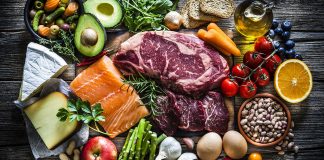
“I have no strength unless I eat meat.” True or false?
Physical strength is often automatically associated with meat consumption, and the association seems logical: doesn't the strength of the animal that has become food pass through digestion to the body that consumes it? This is the question we seek to answer in this article.

Fuel for health
Despite often being labelled as the main culprits for weight gain, carbohydrates are actually vital macronutrients, alongside proteins and fats. They provide the body with energy.