














Sweet and bitter calories
Although all calories provide the same amount of energy, they are not equal in terms of their nutrient content or the way they affect the body.

Being your best you
A week before he left for college, megachurch pastor Steven Furtick’s oldest son asked him, “Out of everything you’ve taught me, what’s the best advice you can give me right now?”

More than stardust | Grandparents and their spiritual heritage
"Children are not a distraction from more important work. They are the most important work.” (Dr John Trainer)
Sometimes I pass my grandparents' house, which...

Why I don’t believe in free time
I believe that the illusion of free time seen as a different world, separated from everyday active life, must be replaced by the image of proactive free time– just like a day of work that satisfies us.

Louis Braille | The blind man who opened their eyes
Louis Braille said: "God was pleased to hold before my eyes the dazzling splendours of eternal hope. After that, doesn't it seem that nothing could keep me bound to the earth?"

On the banks of a river where no one had ever been
Jim Elliot was 25 years old when he headed to Ecuador as a result of the answer he sought from God regarding his future.

Realistic expectations, the secret of lasting relationships
Aside from fuelling jokes about how women impose unrealistic standards on men, or how men are just grown-up children who want their wives to be their mothers, the expectations couples place on their relationship define how they relate to each other, and influence marital satisfaction.
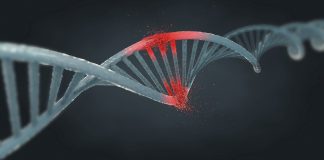
Humans and chimpanzees
Is the chimpanzee the human’s closest relative in the animal world? According to the theory of evolution, the answer is a categorical YES. Specialised literature abounds in generous estimates of human-chimpanzee genetic similarity, ranging from 96% to 99%. But how are these percentages obtained, what assumptions do they hide, and what do they mean beyond the evolutionary interpretation?

Are you really okay?
Let me ask you a question: if a friend of yours or I were to stand in front of you today and ask, “Are you OK?” how would you respond? Could you, or would you, share how you really are? As a society, we seem to be becoming more and more aware of the mental health crisis we are in. On 8 September, Australia...

To whom, how much, and how do we lend money? | Biblical coordinates
In order to obtain money, along with the facilities offered by specialised institutions (banks, credit unions, mutual assistance services), many people resort to a series of ad-hoc financial relations, known as “personal loans”.

“Love yourself” | How biblical is the concept of self-care?
Widely discussed in recent years, the term self-care generally refers to focusing on the needs and goals that contribute to our well-being. “Love yourself!” has become the motto of this “ultimate form of self-care,” which some Christians see as a stepping stone toward loving and caring for others. But just how biblical are the ideas of self-love and self-prioritization—concepts so deeply woven into...

Make sure your kid knows these code words
It’s important to grant our kids their independence, but would they know what to do in an uncomfortable, tricky or dangerous situation?

Avicii: true stories
With his hands clasped on the barbell, the superstar stares blankly and tells his personal trainer that his body needs time to adjust because he has been suffering from anxiety for a long time. Because of this, his body does not differentiate between cardio and panic. Two years later, on April 20th, 2018, the lifeless body of the famous DJ Avicii was found...

Gethsemane, the garden of the divine sighs
As soon as the tourists leave the land of the silent agony of Gethsemane, their lives return to normal, and the garden where the Son of God sobbed in indescribable pain, misunderstood and unsupported even by His closest disciples, sinks back into oblivion.

An unexpected return, the premise for missing the meeting with Christ
How important is the second coming of Jesus Christ in traditional Christianity?