











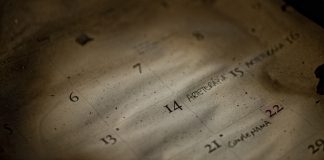
Sunday is the seventh day of the week. True or false?
According to the international standard ISO 8601, Sunday is the seventh day of the week. However, many countries, including the US, Canada, and Japan, consider Sunday as the first day. Where does this contradiction come from and why does it matter if Sunday is the first or the seventh day of the week?
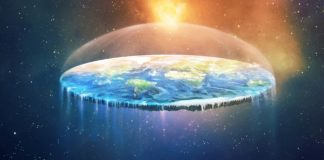
What the Bible says about the flat Earth theory
Against the background of declining confidence in the elites—be they political, religious or scientific—flat Earth theory has lately been revived and promoted by a wave of fake news and misinformation that circulates on social media. In this article we will analyse the connection between the Bible and the flat Earth theory.
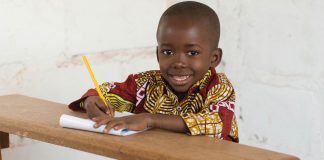
The boy who harnessed the wind
From a certain point of view, our life can be divided into moments when we have let circumstances determine our future, and moments when we have gone where we wanted to go, despite the circumstances.

The spirit of the age: Trends that are reshaping our lives
The spirit of our age is revealed in the actions that have become so commonplace that we no longer notice them, even though they have become trends.
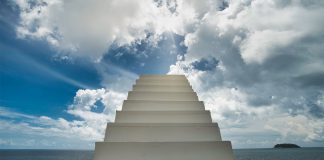
Picturing heaven
What do you imagine heaven will be like? American science-fiction writer Isaac Asimov famously said, “For whatever the tortures of hell, I think the boredom of heaven would be even worse.” Although I love Jesus, I think I am a bit afraid of getting bored there too. There’s a prevailing picture of heaven as being some sort of suspended animation, which may play into this.

Deal with the devil
Among the many perplexing phenomena the internet offers, recent public statements by certain American artists stand out. These individuals, popular in various circles, openly admit to having made a deal with the devil—selling their souls and becoming his servants in exchange for career success, wealth, and fame.
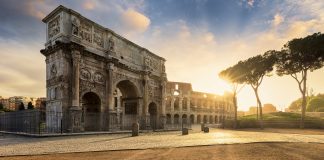
The Edict of Milan
In Milan, in 313, Constantine participated in his sister’s wedding to Licinius, where he also signed the Edict of Milan. This decree, which officially recognised and legalised Christianity, marked the symbolic end of Diocletian’s era of persecution while defining Constantin’s religious policies.

The imminence and delay of the eschaton
This article addresses the two often conflicting aspects of the parousia: its imminence and its delay.

We need water
The question of the origin and justification of the recommendation to drink at least eight glasses of water a day was first seriously examined in a scientific publication by Heinz Valtin.
Friends who bring us closer to heaven
Both personal experience and numerous studies confirm that genuine friendships are an essential source of balance and well-being, and that cultivating them contributes significantly to our physical and emotional health.

When love blooms a second time | Couples who find each other after divorce
Many couples only realise after divorce the price they have paid for failing to find common ground, and a few even manage to rediscover the forgotten path to their partner's heart and to rebuild their relationship.

Maimonides and Jesus of Nazareth
In the turbulent times of the first crusades to reclaim Palestine and Jerusalem from the Muslims, a Jew was born in 1135 AD in Cordoba, the capital of Muslim Andalusia. His influence would leave a strong mark not only on Jewish thought but also on Christian and Islamic thought. His name was Moses Maimonides, or Rabbi Moshe ben Maimon.
There is no hell
“You’re going to hell!” The words dripped with a violence, barely contained. “Repent of your wickedness,” a voice called again from the middle of a mob holding placards. I didn’t appreciate these words being directed at my wife and me.

Identity crisis: a short guide for parents of teenagers
I have two reasons for writing this article on identity crisis. First, I am the father of four children, three of whom are very different teenagers (14, 17 and 19 years old) and I think I have a vague idea of what it means to deal with teens. Second, in the studies I’ve recently taken up, I was surprised to discover that most...
Psychotronic attacks, the news aggregator, and the absurdity factory
A recent article on the website of a Romanian news aggregator claims that prayer protects against psychotronic attacks because it "raises the brain's operating frequencies". The article is a prime example of an editorial genre that proliferates precisely because of the absurdity of its claims, not in spite of them.