














How false religious conspiracy theories came to abound
The documentary The Resurrection Tomb is based on James Tabor and Simcha Jacobovici’s book The Jesus Discovery[1] and resumes a controversial topic, also published in 2007, when a similar film was released.

Interpreting Scripture: Bible Questions and Answers | Book Review
Interpreting Scripture is a book published by the Biblical Research Institute in the USA. It is aimed at people who want to understand the Bible better.

Procrastination: Why we procrastinate and how to win the war on ourselves
Procrastination is self-harm, psychologist Piers Steel says. A kind of self-harm that we can become addicted to if we do not detect the reasons behind it and especially the effective strategies to counter it.

“If the paper screen is closed, it means I’ve died”
When a closed window shade becomes an SOS sent by those used to living on their own but afraid of dying alone, something has fundamentally changed in a society that not long ago valued human relationships.

How to make sure we have a rational faith
Fundamentalist movements, extremist and sectarian religious beliefs, manipulations of the mass of believers, conspiracy theories within religious sects, and other such threats, emphasise the need for critical thinking.

Daily habits for a good memory
It happens to all of us. We misplace the keys, forget a phone number or where we put our reading glasses. With age, such things happen more often, whether we like it or not. The good news is, our brain continues to produce new cells regardless of our age. Therefore, it is possible to have a good memory despite the aging process.
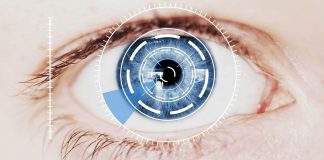
The evolution of the eye
The eye's intricate structure has long been a focal point in the creationism vs evolutionism debate, serving as a key example in the argument of irreducible complexity. More recently, methods of simulating the evolution of the eye have emerged, which claim to provide significant support for Darwinism. Who is right?

Digital natives, digitally naive: life at the dawn of another revolution
The generation born with the tablet and the smartphone in its arms, but which ends up being exploited by big data cultivators and controlled by radicalization and polarization, can become the generation that implements anti-democratic movements.

Why I believe in God
If I could turn back time and return to my friend’s living room that day, when she was telling me with tears in her eyes that she wished she could believe, that she tries but is not able, I would probably find more appropriate words than I did then.

A blood-red sunrise: martyrs and the instinct of persecution
Even though we have been in a much better place for 700 years now, we know that the passing of time has not eliminated the instinct of persecution from human nature.

What do we do with the lingering sense of guilt?
I baptize you with water for repentance. But after me comes one who is more powerful than I, whose sandals I am not worthy to carry. He will baptize you with the Holy Spirit and fire. – Matthew 3:11

Is Jesus Christ the only Saviour of the world?
How can salvation be real and certain only through Jesus Christ when countless people have never even heard His name? If billions of people have no knowledge of Him, isn’t the role of Jesus Christ as the Saviour of the world exaggerated? And are there no other ways of salvation besides Him?

The flat Earth theory in the Middle Ages
Atheists frequently invoke the theory that in the Middle Ages, Christians (not just lay people, but even church leaders) believed in the myth of the flat Earth.

Symptoms of a marriage that’s doomed for divorce
Behind the prelude to a divorce are four major destructive behaviours which can prevent the couple from keeping their enthusiastic promise of staying together ...for better or for worse, till death us do part.

The Second Coming Files: A 2000-Year Inquiry | Part I: The fossilisation of the great Christian hope
Any religion’s popularity depends on the rewards it promises. While people are interested in the immediate benefits of this life, they are mostly interested in the future, the hope their religion brings, and how solid it is.