













Sacred writings
How do the Christian Scriptures differ from non-Christian sacred writings (the Quran, Vedas, Dharmas, Book of Mormon, etc.)?

Tony Giles and the courage to feel the world
Close your eyes, cover your ears, and imagine that all your life you will need to get by without being able to see or hear much. Perhaps merely imagining this makes you shiver, and in no way can you associate such a life with joy, independence, or travel. Tony Giles is one of those people who has managed to successfully remove all these...

Why did Jesus speak in “riddles”?
In order to communicate effectively, our speech must be clear and unambiguous. That is why believers tend to view the language of the Bible as a report: black and white, exact, without embellishments; just a dry sequence of facts.

“If the paper screen is closed, it means I’ve died”
When a closed window shade becomes an SOS sent by those used to living on their own but afraid of dying alone, something has fundamentally changed in a society that not long ago valued human relationships.

11 million people die each year from these nutrition mistakes
From Europe to Asia and from Africa to the Americas and Australia, none of the culinary traditions, not even those acclaimed by scientists, generate an optimal supply of nutrients. Moreover, the food we eat daily kills 11 million of us prematurely every year. So then, what should we eat?

Jesus: Where two worlds meet
Un hombre pasa con un pan al hombro.../Otro busca en el fango huesos, cáscaras/¿Cómo escribir después del infinito?

Augustine, the man of the millennium
His philosophy and theology dominated human thought for over a thousand years. Until Thomas Aquinas emerged in the 13th century, Augustine was undoubtedly the most important thinker of the medieval period.
Can God be removed from history?
“Is God dead?” was the question on the cover of Time magazine on April 8, 1966. Three-and-a-half years later (December 26, 1969), the publication changed that to: “Is God coming back to life?”
The myth of myths | Is religion just a collection of myths?
The diversity and divergence of religious beliefs clearly indicate that not all religious doctrines and perspectives can be true. Throughout history, there have been vastly different universal religions, each with multiple interpretations and denominations. We have religions, not just “religion.” However, if there is one true religion that respects truth, freedom, and intelligence, the myth of myths collapses.
Friedrich Nietzsche, Christianity, and Jesus of Nazareth
“I condemn Christianity; I bring against the Christian church the most terrible of all the accusations that an accuser has ever had in his mouth... The Christian church has left nothing untouched by its depravity; it has turned every value into worthlessness, and every truth into a lie, and every integrity into baseness of soul... the cross as the distinguishing mark of the...

The return to nature
What would you think if your doctor prescribed a dose of nature, as a clinical and therapeutic treatment—to admire a cloud, to have a meal at the beach, to bury your face in the grass? This is exactly what some doctors are doing, after studies have shown the benefits of connecting with nature—especially since the trend of moving away from nature in recent...
The IPCC report: How real is the “code red for humanity”?
The Intergovernmental Panel on Climate Change (IPCC), the United Nations body for assessing the science related to climate change, has published its latest assessment of climate change in a report referred to by the UN Secretary-General as a "code red for humanity".
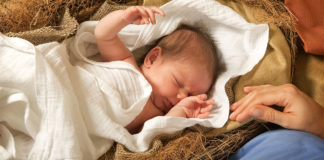
The cry of baby Jesus
It is said that the mental illness Friedrich Nietzsche suffered from for 11 years before he died was triggered by the philosopher witnessing a horse being whipped by its master. The cruel sight of suffering made Nietzsche run to the horse and wrap his arms around its neck to protect it. The great philosopher collapsed to the ground, and never recovered from the...

The war in Iran and the victory that could destroy peace
The attacks by the United States and Israel on Iran have been presented as an inevitable strategic move. However, the last 20 years have shown that, while wars can be won quickly, achieving subsequent political stability is much more challenging. The situation in Iraq in 2003 remains the clearest example of this. Will Iran repeat this pattern?
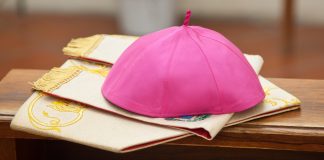
Gregory the Great: the first great medieval pope
Regarded as a saint and one of the six Western Fathers of the Church, Gregory the Great (590–604) is often considered the first great pope. He was the first monk to become pope, and is considered one of the most important. He is also known for sending diplomats (missionaries) who persuaded kings to fight against the pagans and heretics of the West.