











Becoming truth tellers on post-truth social media
American President Joe Biden was obviously upset with Meta when, in mid 2021, he accused it of “killing people” for its seeming tolerance of so much Covid-19 misinformation. He backed down a little by clarifying that he wasn’t blaming Facebook itself, but the “bad information” they allowed on the site. Other have argued we live in a post-truth world.
Money and faith: Christian strategies for times of crisis
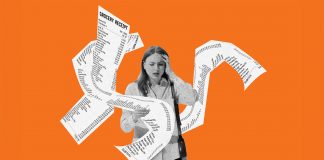
A financial crisis never comes alone. It brings uncertainty, fear, sleepless nights, and the shame of being unable to meet one's expenses. Can faith bring meaning amid financial chaos?
God’s silence
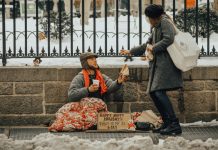
Renee James was 18 when she decided to stop praying. If God was going to be silent, she thought, she would be silent too. She had been praying for years for the healing of her brothers, Sean and Niall, one suffering from autism and the other from Down syndrome. Yet there had been no answer.

Solving the World Cup puzzle
If there was a theme that could be attributed to the 2022 World Cup more than any other, it’s “murky ethics”. If you’ve got mixed feelings about this year’s edition of the prestigious 92-year-old tournament, you’re likely not alone.
Erosion of trust | The ultimate effect of conspiracy theories
From television stories to personal experiences, we live in a world where honesty seems to be an increasingly rare commodity and suspicion and scepticism become protective shields.
Baptism by fire
Probably no group in Christian history has been so unfairly judged as the Anabaptists.
“More than a carpenter” | Book review
Josh McDowell, founder of the trans-denominational Christian organisation Campus Crusade for Christ and author of More Than a Carpenter, is known to the public after a decades-long career and having had several volumes published in the field of apologetics.

Called to attention
We live in a world in which the news is far more pervasive than the events it reports. An event happens in one place but is almost instantly repeated and echoed in millions more. And while the event might be shocking, tragic or horrifying, a wider and sometimes greater toll is exacted by its reportage, by the slow-motion replays, by the breathless punditry...
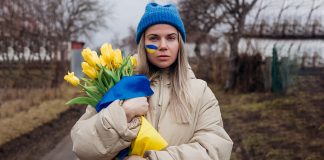
Tears, war, and tulips: a day among the Ukrainian refugees at the Siret Customs Point
The wind is blowing and it is snowing at the Siret Customs Point. Refugee groups stream by, women with children clinging to them, and the words of a little girl from another war, concluded almost eight decades ago, keep running through my mind: “And this was imprinted in my mind, that when my father is not home, it is war.”
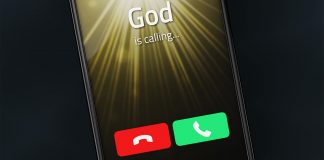
Messages from above
One day, Jesus’s disciples—who followed Him about, observing His every word and action—asked Him to teach them how to pray.

Depression, the silent killer
In 2020, depression became the second leading cause of global morbidity and it is projected to be the first in 2030,[1] according to a forecast by the World Health Organization (WHO).

Cohabiting before marriage reduces the risk of divorce: true or false?
More and more people are choosing cohabitation over marriage. Many young people believe that cohabiting helps them to make better decisions about marriage by giving the couple a chance to "practise" before making a lifelong commitment. There is also a belief that cohabiting before marriage reduces the likelihood of marital problems or divorce.
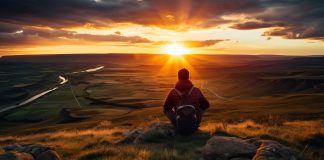
The face that transforms me
Every time I look through the lens of a microscope, I am struck by the realisation that beyond what the naked eye can see lies a universe far deeper and richer.
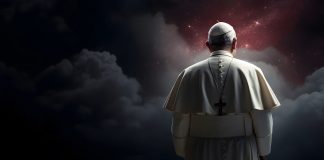
What happens if the pope dies?
Images of Pope Francis have recently been released by the Vatican for the first time after he was admitted to hospital in a critical condition for pneumonia following a complex lung infection. Given his advanced age and frailty, many have wondered whether the pope is close to death.
Jesus is the argument
Celsus was concerned about the spread of the new sect called Christianity. He felt that Christianity's view of the world and of life was so different from the ancient world order that, if accepted by the majority, it would ruin society.