














In search of lost meaning
Traditional communities are like rivers, while modern societies are like oceans, said Polish sociologist Zygmunt Bauman. Consider that a river—deeper or shallower, faster or slower—always has a direction, as traditional societies usually direct the lives of their members. The ocean is a different story.
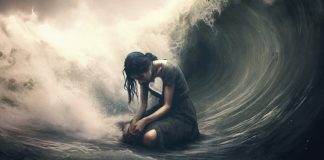
A tsunami put under a microscope
In 2004, we experienced firsthand one of the most devastating tsunamis of our century. It was early morning, on Boxing Day.

“Immortality of the Soul or Resurrection of the Dead?” | Book review
The obvious opposition to one of the most widespread Christian teachings is likely to provoke strong reactions, which is what happened with the book Immortality of the Soul or the Resurrection of the dead?,[1] by the renowned Lutheran theologian Oscar Cullmann (1902-1999).

Misleading bridges, and better prayers
Bridges seem to be the emblem of existential stress for Romanians. In the face of a difficult situation, even Romanian folk wisdom recommends: "Make a pact with the devil until you have crossed the bridge."

God, armed violence and genocide
One of today's dilemmas disputes, dialectically, the complex reality of the Bible and the secular way of looking at the "terror of history": Is God a source of morality superior to humanism, or not?

Are we smarter than previous generations, or do we simply think differently?
Researcher James Flynn of the University of Otago identified a surprising phenomenon: “We get far more questions right on I.Q. tests than each succeeding generation. (...) Indeed, if you score the people a century ago against modern norms, they would have an average I.Q. of 70. If you score us against their norms, we would have an average I.Q. of 130. Now this...

From science to magic: the unpredictable journey of positive thinking
Over the years, the concept of positive thinking has proved to be extremely versatile and has managed to lure millions of people into the grip of powerful promises, convincing them that life can offer more than what they have been able to experience so far.

When conflict occurs
Disagreements between husbands and wives happen no matter how much they love each other, and this isn’t necessarily bad. Conflict is normal in daily life, even for happily married couples. It happens when two very different people grow closer to each other and notice that they have different priorities, beliefs, habits and values.

Reasons for the cross of Christ: why was His sacrifice needed?
The name of Jesus brings to mind the gift of the incarnate Godhead—their supernatural acts, astonishing wisdom, incomparable goodness, unmitigated innocence, supreme sacrifice, offered salvation, and our only certain hope.

“Boundaries: When to say yes, how to say no to take control of your life” | Book review
As Christians, we learn that we must offer love and devote ourselves to the needs of those around us. However, in life, there are times when we feel overwhelmed by what others ask of us. We feel that some people take advantage of us—our kindness, our time, or our availability. We would like to refuse certain people or tasks that are assigned to...

My journey to Bethlehem
They say that "all roads lead to Rome". This famous saying originated in ancient times with the extensive network of roads built by the Romans to facilitate communication and travel throughout their empire.

Real information is dialogue
I request from my colleagues at the ST.N editorial office at least three sources for news and at least two books for the analysis topics: one for and one against. Ideally, the reading of the first two books will give rise to the desire to look for at least two more, so that the differences are clearer. After that, there will be a...

The Ecumenism Files IV: Ecumenism in recent times
To what extent is ecumenism included in God's concerns? Does God's agenda include this objective?

Suffering and the meaning of life
I have always imagined that well-being, bright prospects, good health and a clear purpose in life tend not to inspire questions about the meaning of life very often.

Reading for continuous growth
"The acquaintance with a single good book can change a life." – Marcel Prévos