













A child caught up in the struggle for Black emancipation
For La Tanya Butler, childhood memories are imbued with the injustices that Black people regularly endured at the hands of white people at a time when discrimination was enshrined in law.

“Eternity In Their Hearts” | Book review
Born in Canada, in 1935, Don Richardson was a missionary who fervently carried on the Renaissance spirit of the great missionaries. Having studied at the Prairie Bible Institute and the (Wycliffe) Summer Institute of Linguistics, together with his wife, he worked as a missionary among the Sawi of Papua New Guinea for 15 years, and translated the Bible into their language. His books,...

I didn’t know that God cries too
In those times when grief accompanies us and we find ourselves alone in the middle of the night, does God shed tears with us?

Rest for our souls
What we do in our free time reveals who we are when we step out of the whirlwind of daily tasks. But the projects and relationships to which we devote our free moments also reveal who we will become. At the end of the journey, people see the value of every second much more clearly, and often realise that rest—physical rest, but more...

Augustine, the man of the millennium
His philosophy and theology dominated human thought for over a thousand years. Until Thomas Aquinas emerged in the 13th century, Augustine was undoubtedly the most important thinker of the medieval period.

The risen Jesus
Was the death of Jesus the end of an extraordinary life, or just the beginning of eternal life for those who believe in Him?

The microscope of theology versus the decalogue of science
The Jewish people walked on dry land in the middle of the water, not in the Red Sea, but somewhere in the Nile Delta. This conclusion by researchers from the National Center for Atmospheric Research and the University of Colorado (USA) made headlines on Reuters and the BBC in September 2010.

Fighting over the West: Orthodoxy, Protestant Reformation, and Catholicism
At the beginning of the 15th century, the threat of the Ottoman Empire to Eastern Europe was a painful certainty. The last Byzantines, aware of the ensuing disaster, called on Western aid, seeking political union with the Roman Catholic Church.


God and the onion test
Humans have only a fifth of the genetic material of an onion, and slightly more DNA than a mouse. Why would the Creator of life use five times more genetic information for an onion than for a human? And why would He create humans to be only slightly more genetically complex than mice? Aren't long and aimless evolutionary processes a better explanation for...

The culture of blasphemy
According to its creators, "JC" was to be a 30-minute-per-episode animated series about Jesus Christ who wanted to escape the overwhelming shadow of his father and live as an ordinary man in New York. The project was developed by comedian and writer John Michaelson. However, due to the controversial nature of the subject matter, only the pilot was produced and filmed, and it...

Is your teen in an AI relationship?
More teens are using AI companions—but what some think of as innocent, others see as deadly.

Movies and the fascination with good
Starting with biblical stories, moving on to myths and legends, and finally reaching the contemporary film industry, people have always been fascinated by heroes. But what makes us look for heroes? What do modern heroes look like and what do they mean to the contemporary world?
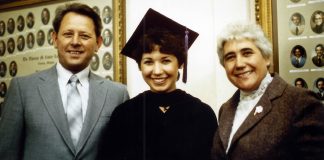
The mountain within
Dr Herta von Stiegel draws fascinating parallels: between Nadeș and New York, London, and Nairobi; between the hills of Transylvania and Kilimanjaro; between life lessons learned in childhood and a remarkable career in leading banking institutions; and between the planet's potential for development and the divine plan for character building.

Is weight regain after weight loss inevitable?
For anyone who has ever dieted to lose weight, weight regain is the most feared nightmare. Unfortunately, the very biology of those who lose weight predisposes them to weight regain, meaning that, despite their initial success, they are likely to regain the weight they lost. Fortunately, there are strategies that can help people fight against this tendency.